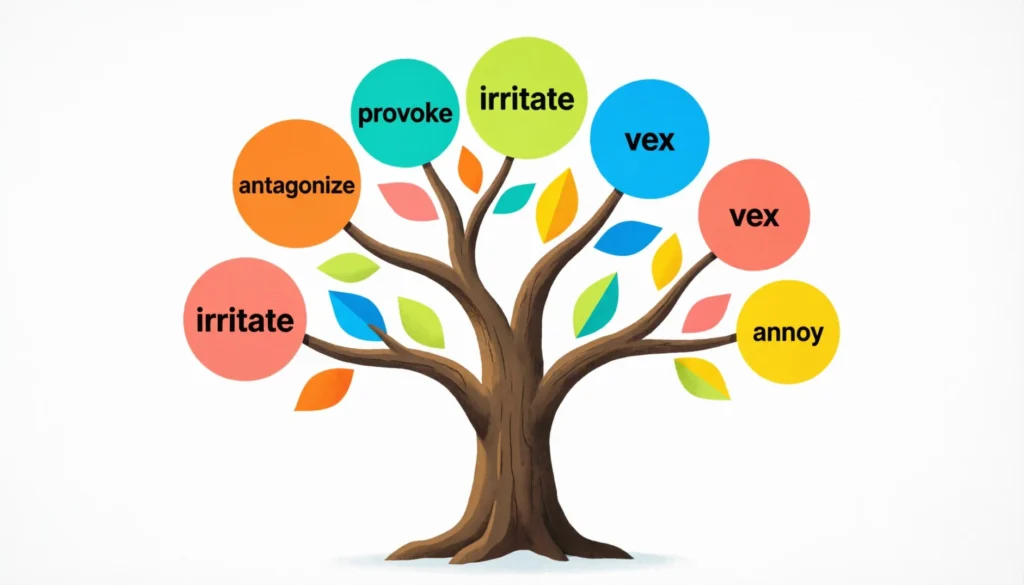

Have you ever tried writing an email or a blog post and realized you keep using the word antagonize over and over? It can feel repetitive and make your writing sound stiff.
Antagonize is a useful word that means to irritate, annoy, or provoke someone. If you are a student, freelancer, blogger, or just chatting in daily life, knowing its synonyms can make your English sharper, more expressive, and fun to read.
In this guide, we’ll explore 50 synonyms for antagonize, show you exactly how to use them, and even break them into easy-to-understand categories.
By the end, you’ll never feel stuck searching for the right word again.
This article is a complete guide for anyone wanting to boost writing, blogging, and communication skills with practical word alternatives for antagonize.
What Does Antagonize Mean?
- Antagonize – to annoy or upset someone on purpose.
- Antagonize – to make someone feel hostile or opposed toward you.
Use it to describe actions that create tension or conflict, whether in writing, conversation, or storytelling.
Contextual Usage
When and How to Use Antagonize
- Writing & Blogging: “Using this tone might antagonize readers if not careful.”
- Emails & Workplace: “Try not to antagonize your colleagues in meetings.”
- Daily Conversations: “He antagonizes his little brother just for fun.”
💡 Tip: If a word sounds harsh in formal writing, consider a milder synonym like provoke or irritate.
50 Synonyms List for Antagonize
| Synonym Word | Meaning | Examples |
| Aggravate | To make someone annoyed or upset | 1. His jokes aggravate her. 2. Loud music aggravates my headache. |
| Annoy | To bother or disturb | 1. The dripping faucet annoys me. 2. She annoyed her brother by teasing him. |
| Irritate | To make someone slightly angry | 1. Constant questions irritate the teacher. 2. The tag in my shirt irritates my skin. |
| Provoke | To deliberately cause a reaction | 1. Don’t provoke the dog. 2. His comment provoked laughter. |
| Vex | To make someone frustrated or worried | 1. The lost keys vexed him. 2. She was vexed by the delay. |
| Exasperate | To irritate intensely | 1. His lateness exasperates me. 2. The complicated instructions exasperated everyone. |
| Antagonize | To make someone hostile | 1. He antagonizes his opponents in debates. 2. Her sarcasm antagonized the teacher. |
| Offend | To hurt feelings | 1. His words offended her. 2. Don’t offend the guests. |
| Irritate | To cause slight anger | 1. The noise irritates me. 2. She was irritated by the spam emails. |
| Rile | To make someone angry | 1. Don’t rile your teammates. 2. His teasing riled her up. |
| Frustrate | To cause disappointment or anger | 1. The slow internet frustrates me. 2. The puzzle frustrated the students. |
| Bug | Informal: to annoy | 1. Stop bugging me! 2. His questions bugged the teacher. |
| Hassle | To annoy or bother | 1. Don’t hassle me at work. 2. The long line hassled the shoppers. |
| Needle | To provoke teasingly | 1. He needled his brother. 2. She was needled by classmates’ jokes. |
| Taunt | To tease in a mean way | 1. The kids taunted him. 2. He was taunted for his accent. |
| Bother | To cause discomfort or trouble | 1. The noise bothered her. 2. Don’t bother the dog. |
| Infuriate | To make extremely angry | 1. His lies infuriate me. 2. The delay infuriated the passengers. |
| Exasperate | To irritate deeply | 1. He exasperated his boss. 2. The traffic exasperated her. |
| Agitate | To disturb or upset | 1. Loud arguments agitate the neighbors. 2. The news agitated him. |
| Incite | To encourage strong feelings | 1. The speech incited protest. 2. He incited anger with his remarks. |
| Irritate | Slightly anger | 1. Spam emails irritate me. 2. His tone irritated everyone. |
| Provoke | Cause reaction | 1. Don’t provoke him. 2. The scene provoked tears. |
| Vex | Frustrate | 1. His attitude vexed her. 2. The error vexed the programmer. |
| Disturb | Upset or interrupt | 1. Loud music disturbed her. 2. He was disturbed by the news. |
| Gall | To annoy boldly | 1. His nerve galled me. 2. The insult galled everyone. |
| Exasperate | Irritate strongly | 1. He exasperated his friends. 2. Traffic exasperated her. |
| Irk | To bother or annoy | 1. His complaints irk me. 2. It irks her when people are late. |
| Offend | Hurt feelings | 1. That joke offended him. 2. Don’t offend the audience. |
| Aggravate | Increase annoyance | 1. The delay aggravated him. 2. Loud noise aggravated her headache. |
| Bother | Disturb | 1. Don’t bother me now. 2. His behavior bothered the class. |
| Rile | Make angry | 1. His teasing riled her. 2. Stop riling the dog. |
| Annoy | Irritate | 1. His singing annoyed me. 2. She was annoyed by the emails. |
| Peeve | Minor annoyance | 1. Slow drivers peeve me. 2. That habit peevs her. |
| Infuriate | Make furious | 1. Lying infuriates him. 2. Traffic jams infuriate her. |
| Nettles | Irritate | 1. The questions nettled him. 2. Her tone nettled the audience. |
| Needle | Tease | 1. He needled the classmate. 2. Don’t needle your friends. |
| Taunt | Mock | 1. The kids taunted him. 2. He was taunted unfairly. |
| Provoke | Stir reaction | 1. The news provoked anger. 2. His act provoked laughter. |
| Agitate | Upset | 1. The debate agitated the group. 2. Loud music agitated the neighbors. |
| Exasperate | Frustrate | 1. The form exasperated the client. 2. Delays exasperated them. |
| Vex | Trouble | 1. Misplacing keys vexed him. 2. The error vexed the teacher. |
| Irritate | Annoy | 1. Her questions irritated me. 2. The alarm irritated him. |
| Offend | Upset | 1. Don’t offend the host. 2. His remark offended her. |
| Aggravate | Irritate | 1. Loud noises aggravated her. 2. The delay aggravated him. |
| Rile | Upset | 1. His behavior riled everyone. 2. Don’t rile the baby. |
| Bug | Irritate | 1. Stop bugging me! 2. The call bugged him. |
| Hassle | Annoy | 1. Don’t hassle your coworkers. 2. The line hassled us. |
⚡ Pro Tip: Notice some words like irritate, provoke, or aggravate can slightly differ in intensity or context. Choose carefully!
Categorized Synonym Clusters
| Category | Synonyms |
| Formal | Aggravate, Exasperate, Incite, Agitate, Provoke |
| Informal | Bug, Peeve, Hassle, Needle, Rile |
| Academic | Exasperate, Vex, Irritate, Antagonize, Offend |
| Technical/Legal | Incite, Agitate, Provoke, Disturb |
Antonyms of Antagonize
| Antonym | Meaning | Examples |
| Calm | To soothe or make peaceful | 1. He calmed the angry crowd. 2. Soft music calms me. |
| Appease | To please or pacify | 1. He appeased the customer. 2. She appeased her friend with a gift. |
| Soothe | To ease anger or pain | 1. The lotion soothes my skin. 2. She soothed the crying child. |
| Please | To make happy | 1. The gift pleased her. 2. He tried to please his teacher. |
| Support | To help or encourage | 1. He supported his teammates. 2. She supported her colleague’s idea. |
| Comfort | To make someone feel better | 1. The hug comforted her. 2. Soft blankets comfort the patient. |
Comparison with Related Words
- Antagonize vs Irritate:Irritate is milder; antagonize often causes hostility.
- Example: “Her comment irritated me” vs “Her comment antagonized him.”
- Example: “Her comment irritated me” vs “Her comment antagonized him.”
- Antagonize vs Provoke:Provoke can lead to action, not just annoyance.
- Example: “His words provoked a response” vs “His words antagonized his peers.”
- Example: “His words provoked a response” vs “His words antagonized his peers.”
- Antagonize vs Vex:Vex is less intense and often internal frustration.
- Example: “The error vexed her” vs “He antagonized the teacher.”
- Example: “The error vexed her” vs “He antagonized the teacher.”
- Antagonize vs Annoy: Annoy is casual, everyday; antagonize is more serious.
- Antagonize vs Aggravate: Aggravate often increases an existing problem.
FAQs About Antagonize
- Is antagonize formal or informal?
- Mostly formal; casual alternatives are annoy or bug.
- Mostly formal; casual alternatives are annoy or bug.
- Can antagonize be used in emails?
- Yes, especially in professional warnings or guidance.
- Yes, especially in professional warnings or guidance.
- What’s the difference between antagonize and provoke?
- Provoke can trigger any reaction; antagonize usually triggers hostility.
- Provoke can trigger any reaction; antagonize usually triggers hostility.
- Is antagonize always negative?
- Yes, it implies causing discomfort or conflict.
- Yes, it implies causing discomfort or conflict.
- How can I remember synonyms for antagonize?
- Group them by intensity: mild (annoy), medium (irritate), strong (exasperate, provoke).
- Group them by intensity: mild (annoy), medium (irritate), strong (exasperate, provoke).
Mini Vocabulary Growth Section
Learning synonyms for antagonize:
- Improves your writing and speaking flexibility.
- Boosts blog readability and engagement.
- Strengthens communication skills and vocabulary authority.
- Helps you sound precise, confident, and professional.
Conclusion
Now that you know 50 synonyms for antagonize, it’s time to practice.
Use these words in emails, essays, blogs, social media captions, and daily conversations.
Mix formal and informal options to match your audience.
Understanding subtle differences between words like provoke, irritate, and vex will make your English more expressive and precise.
Keep experimenting, observing how others use these words, and soon you’ll have a richer vocabulary that impresses in both writing and speech.