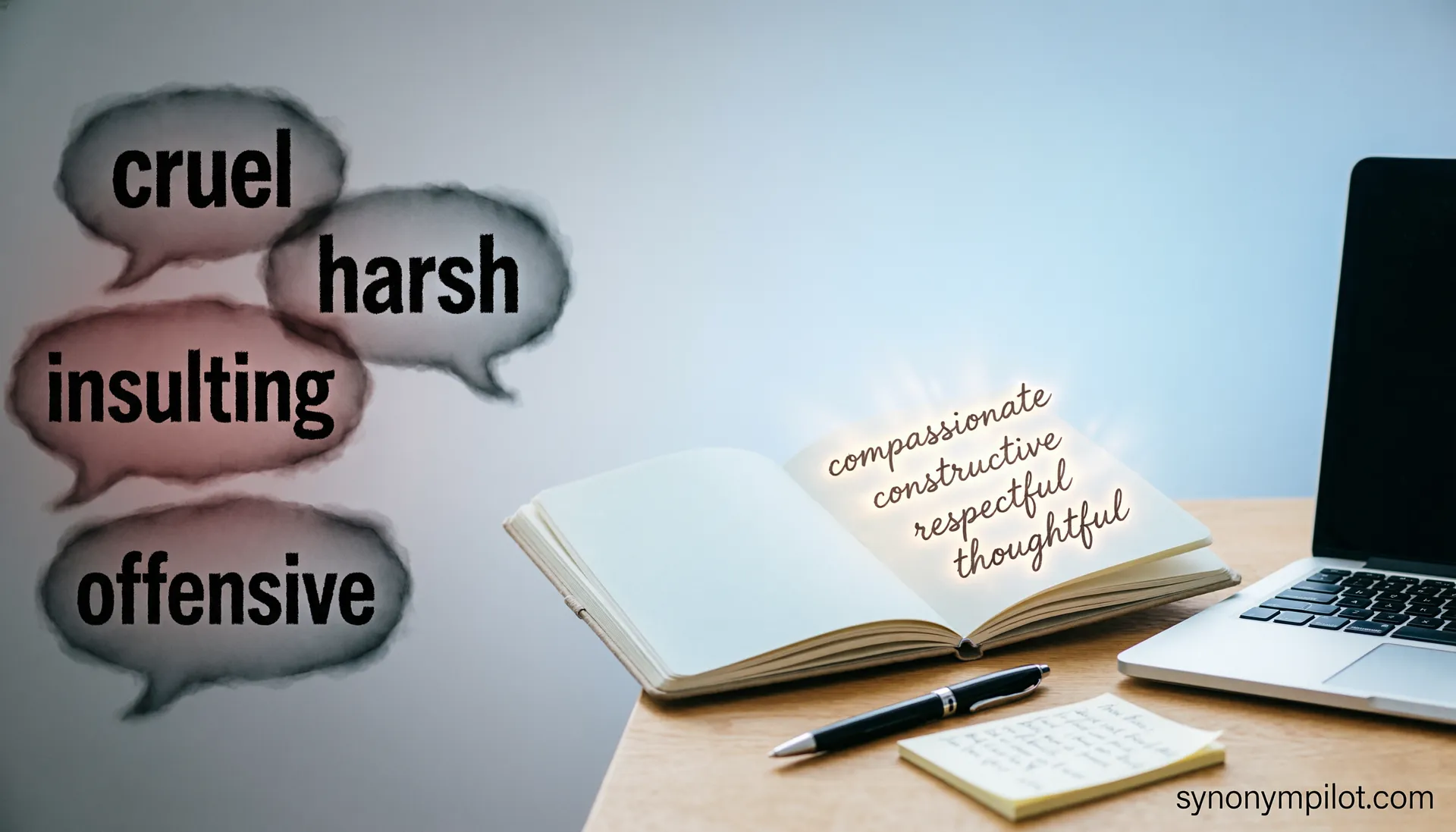
Have you ever written a story or email and kept using the word abusive over and over? I remember struggling to describe a character’s harsh behavior without sounding repetitive. Words like cruel, insulting, or harsh can make your writing much richer.
The term abusive refers to actions, words, or behaviors that hurt, insult, or mistreat someone.
If you’re writing an essay, a blog post, or chatting with friends, knowing alternatives to abusive can make your sentences more powerful and precise.
This guide is perfect for students, bloggers, content writers, freelancers, and anyone looking to expand daily English vocabulary.
Semantic variations like offensive language, cruel behavior, and harmful words are sprinkled throughout to help your writing feel fresh and professional.
What Does “Abusive” Mean?
- Abusive means using words or actions that hurt or insult someone.
- It can describe behavior that is cruel, harsh, or violent.
- Abusive is often used for speech, writing, or physical actions that harm others.
Contextual Usage
When and How to Use “Abusive”
- Writing: “The manager’s abusive comments demotivated the team.”
- Blogging: “Online trolls often leave abusive messages in comment sections.”
- Conversation: “She left the relationship because her partner was emotionally abusive.”
- Email: “Please report any abusive behavior immediately to HR.”
Pro Tip: Use abusive for serious contexts. For lighter teasing or joking, words like rude or insulting may be better.
50 Synonyms for Abusive
| Synonym Word | Meaning | Example |
|---|---|---|
| Cruel | Hurts someone physically or emotionally | His cruel words made her cry. |
| Harsh | Very strict or severe | She received harsh criticism on her essay. |
| Brutal | Extremely violent or intense | The movie showed a brutal fight scene. |
| Insulting | Meant to offend or hurt | Don’t be insulting to your friends. |
| Offensive | Causes hurt or anger | His joke was offensive to many people. |
| Belligerent | Aggressively hostile | He answered in a belligerent tone. |
| Hurtful | Causes emotional pain | Those hurtful words lingered in her mind. |
| Mean | Intentionally unkind | He was mean to his little brother. |
| Abhorrent | Very disgusting or shocking | His actions were abhorrent. |
| Malicious | Wants to harm or upset | She sent a malicious email. |
| Aggressive | Ready to attack or argue | He had an aggressive tone. |
| Intimidating | Makes others afraid | His stare was intimidating. |
| Rude | Lacks respect or manners | That comment was rude. |
| Scornful | Shows contempt or dislike | She gave a scornful laugh. |
| Nasty | Very unpleasant | He made a nasty comment. |
| Vindictive | Wants revenge | She was vindictive after the argument. |
| Disrespectful | Shows lack of respect | The student was disrespectful to the teacher. |
| Tyrannical | Uses power in cruel ways | The tyrannical leader controlled everyone. |
| Contemptuous | Shows strong dislike | Her contemptuous tone annoyed him. |
| Degrading | Makes someone feel less | That remark was degrading. |
| Oppressive | Very harsh or controlling | Oppressive rules hurt employees. |
| Hostile | Aggressively unfriendly | The crowd was hostile. |
| Belittling | Makes someone feel small | Her comment was belittling. |
| Reprehensible | Very bad or unacceptable | That act was reprehensible. |
| Contumelious | Rude and insulting | He used contumelious language. |
| Overbearing | Domineering or bossy | Her overbearing attitude annoyed him. |
| Abominable | Extremely bad or offensive | The crime was abominable. |
| Vitriolic | Bitter and hurtful | She wrote a vitriolic review. |
| Callous | Shows no concern for others | The callous remark offended her. |
| Hateful | Full of hate | His hateful tone hurt feelings. |
| Maleficent | Intentionally evil | The villain was maleficent. |
| Menacing | Threatening | The dog looked menacing. |
| Reproachful | Shows disapproval | She gave a reproachful look. |
| Pernicious | Harmful in a subtle way | Gossip can be pernicious. |
| Disparaging | Expressing negative opinion | She made a disparaging comment. |
| Exploitative | Uses someone unfairly | Exploitative bosses harm employees. |
| Intolerant | Unwilling to accept differences | His intolerant view upset the group. |
| Severe | Very serious or harsh | She faced severe criticism. |
| Opprobrious | Expressing strong criticism | He made an opprobrious statement. |
| Unkind | Not friendly or gentle | That was an unkind joke. |
| Malignant | Intentionally harmful | His malignant actions caused problems. |
| Abusive | Harmful or violent | The relationship was abusive. |
| Brutish | Rough and violent | His brutish behavior scared others. |
| Savage | Fierce and cruel | The attack was savage. |
| Ferocious | Violently aggressive | The ferocious dog barked loudly. |
| Merciless | Showing no mercy | The judge seemed merciless. |
| Ruthless | Without pity | The ruthless manager fired workers quickly. |
| Barbaric | Extremely cruel | The punishment was barbaric. |
| Domineering | Trying to control others | His domineering style upset the team. |
| Toxic | Emotionally harmful | The workplace became toxic. |
Categorized Synonym Clusters
| Category | Synonyms |
|---|---|
| Formal | Reprehensible, Abhorrent, Pernicious, Opprobrious, Malicious |
| Informal | Mean, Rude, Nasty, Unkind, Harsh |
| Academic | Callous, Vitriolic, Disparaging, Contemptuous, Exploitative |
| Technical | Aggressive, Belligerent, Tyrannical, Intimidating, Malignant |
Antonyms for Abusive
| Antonym | Meaning | Example |
|---|---|---|
| Kind | Friendly and caring | She is always kind to everyone. |
| Gentle | Soft and caring | He spoke in a gentle voice. |
| Respectful | Shows respect | Be respectful to your teachers. |
| Compassionate | Shows sympathy | A compassionate friend listens. |
| Supportive | Helps and encourages | The coach was supportive of the team. |
| Considerate | Thinks of others | Be considerate when driving. |
Comparison Section
Abusive vs. Cruel:
- Abusive focuses on repeated harmful actions or words.
- Cruel can describe one-time harsh actions.
Example: “The abusive boss insulted staff daily.” vs. “The cruel joke hurt her once.”
Abusive vs. Harsh:
- Harsh is stricter and can describe rules or criticism, not just people.
Example: “The teacher’s harsh grading surprised students.”
Abusive vs. Insulting:
- Insulting is about words or gestures, while abusive includes behavior.
Abusive vs. Offensive:
- Offensive may be accidental or casual; abusive is intentional harm.
FAQs
1. Can “abusive” be used for writing?
Yes, describing harmful words or content. Example: “The article contained abusive language.”
2. Is “abusive” only for people?
No, it can describe situations, content, or relationships.
3. Can “abusive” be formal?
Yes, it fits academic, legal, and workplace contexts.
4. What is a gentle alternative?
Use unkind, rude, or harsh for less severe contexts.
5. Does “abusive” imply repetition?
Often, yes. Abuse usually occurs repeatedly over time.
Mini Vocabulary Growth Section
Learning synonyms for abusive:
- Improves writing by adding variety and nuance.
- Boosts readability for blogs, emails, and essays.
- Strengthens communication and vocabulary authority.
Using subtle variations like cruel, insulting, or vindictive makes your speech and writing richer and more precise.
Conclusion
Start practicing these synonyms in emails, essays, blogs, social media captions, and everyday conversations.
Using words like abusive, cruel, harsh, or offensive can make your sentences clearer and more engaging. Explore nuances, try writing short stories, or journal daily using these alternatives.
The more you practice, the stronger your vocabulary becomes, making your communication confident, precise, and persuasive.
Remember: mastering synonyms for abusive is a simple way to make your English stronger, more professional, and reader-friendly.

Hi, I’m Theo John, a passionate word explorer who loves diving into the beauty of the English language. I write about synonyms, word meanings, and practical vocabulary tips to help readers communicate with confidence. synonympilot.com