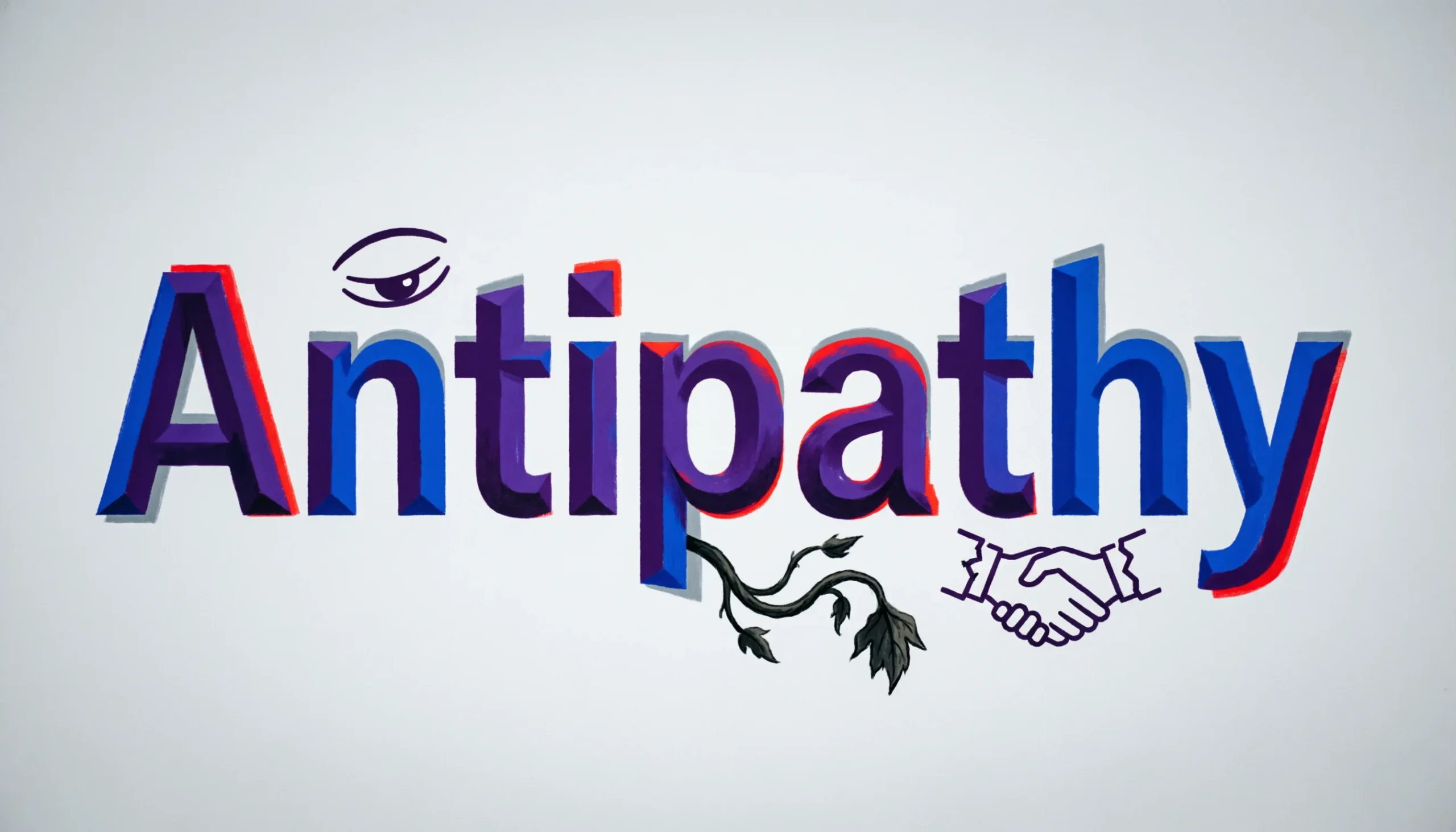
Have you ever felt a strong dislike for someone or something but struggled to put it into words? Maybe you wrote “I don’t like it” too many times in an essay or blog post. Antipathy is the word that captures that exact feeling a natural or strong dislike toward someone or something.
In simple terms, it’s like your mind saying, “Nope, not a fan!” Knowing synonyms of antipathy can make your writing sharper, more engaging, and richer in expression.
If you’re a student crafting essays, a blogger enhancing content, or a freelancer writing emails, these words can save you from repetition and make your language more precise.
Understanding words like aversion, hostility, or repugnance allows you to communicate emotions clearly and powerfully. Using these synonyms naturally will also boost your vocabulary, making your writing professional and relatable.
Featured Snippet Definition
What is a synonym?
A synonym is a word that has the same or nearly the same meaning as another word.
Definition of Antipathy:
- Antipathy is a strong feeling of dislike or opposition toward someone or something.
- It can refer to both mild dislike or deep rooted aversion, depending on context.
- Commonly used in formal and informal communication to express negative feelings.
Contextual Usage
When and How to Use Antipathy
Antipathy is often used in writing, blogging, emails, and conversation to describe dislike clearly. Here are practical examples:
- In writing: “Her antipathy toward dishonesty was clear in every story she wrote.”
- In blogging: “Many readers feel a natural antipathy toward spammy ads online.”
- In conversation: “He showed his antipathy for cold weather by staying indoors all winter.”
Tip: Use antipathy when you want to sound formal or precise; for casual talk, words like dislike or hatred can work.
50 Synonyms of Antipathy
| Synonym Word | Meaning | Examples |
|---|---|---|
| Aversion | Strong dislike for something | 1. I have an aversion to waking up early. 2. She felt an aversion to loud parties. |
| Hostility | Angry or unfriendly feelings | 1. His hostility toward bullies was obvious. 2. The debate showed their hostility to each other. |
| Antagonism | Active opposition | 1. There was clear antagonism between the two teams. 2. He felt antagonism toward unfair rules. |
| Repugnance | Extreme dislike or disgust | 1. She felt repugnance at the idea of cheating. 2. The smell caused repugnance. |
| Disdain | Feeling that something is unworthy | 1. He looked at the messy room with disdain. 2. Her disdain for gossip was clear. |
| Detestation | Very strong dislike | 1. I have a detestation for injustice. 2. His detestation of snakes is well known. |
| Loathing | Intense hatred | 1. She felt loathing for the corrupt politician. 2. The children showed loathing for broccoli. |
| Enmity | Mutual dislike or hostility | 1. There was historical enmity between the nations. 2. Their enmity ended after years of peace talks. |
| Disgust | Strong dislike with revulsion | 1. He expressed disgust at the dirty kitchen. 2. The movie’s violence caused disgust. |
| Animosity | Active hatred or hostility | 1. There was clear animosity between the rivals. 2. His animosity toward cheating teammates grew. |
| Rancor | Bitter resentment | 1. Years of rancor built between them. 2. He spoke with rancor about unfair rules. |
| Repulsion | Strong dislike that pushes away | 1. The rotten food caused repulsion. 2. Her repulsion for lies was evident. |
| Odium | General dislike or disgrace | 1. He earned odium by breaking promises. 2. The scandal brought odium to the company. |
| Disfavor | Loss of approval | 1. He fell into disfavor with his boss. 2. Their actions earned disfavor from the community. |
| Contempt | Feeling that something is worthless | 1. His contempt for dishonesty was obvious. 2. She spoke with contempt about the rumor. |
| Distaste | Mild dislike | 1. He has a distaste for spicy food. 2. She expressed distaste at bad manners. |
| Abhorrence | Extreme hatred | 1. She has abhorrence for cruelty. 2. His abhorrence of cheating is strong. |
| Malice | Desire to harm | 1. His malice toward rivals was clear. 2. They acted with malice in the argument. |
| Ill will | Unfriendly feelings | 1. She bore ill will to those who lied. 2. Ill will lasted after the dispute. |
| Antipathy | Natural dislike | 1. I feel antipathy for dishonesty. 2. Her antipathy toward traffic jams is real. |
| Hatred | Intense dislike | 1. He showed hatred toward cheaters. 2. Her hatred for bullying was known. |
| Disapprobation | Moral disapproval | 1. His actions earned disapprobation. 2. The plan met disapprobation from peers. |
| Rejection | Refusal to accept | 1. She faced rejection from the club. 2. His proposal met rejection. |
| Detest | Hate strongly | 1. I detest dishonesty. 2. She detests loud noises. |
| Loathe | Hate deeply | 1. He loathes cruelty. 2. She loathes traffic jams. |
| Abhor | Hate strongly | 1. I abhor lies. 2. She abhors cheating. |
📂 Categorized Synonym Clusters
| Category | Synonyms |
|---|---|
| Formal | Antipathy, Aversion, Detestation, Disapprobation, Odium |
| Informal | Dislike, Hatred, Loathe, Detest, Distaste |
| Academic | Rancor, Animosity, Antagonism, Hostility, Enmity |
| Technical | Repugnance, Repulsion, Repulsiveness, Odiousness, Revulsion |
🔄 Antonyms of “Antipathy”
| Antonym | Meaning | Example |
|---|---|---|
| Affection | Warm liking | She felt affection for her classmates. |
| Liking | General preference | He has a liking for spicy food. |
| Fondness | Warm feeling toward something | She showed fondness for pets. |
| Attraction | Drawn toward something | There was attraction to the project. |
| Sympathy | Understanding and care | He showed sympathy for the injured. |
| Appreciation | Value and approval | She expressed appreciation for help. |
| Love | Strong positive feeling | He felt love for his family. |
| Approval | Positive judgment | Her work earned approval. |
| Respect | High regard | He showed respect for teachers. |
| Favor | Positive treatment | She enjoyed the favor of her mentor. |
Comparison with Related Words
Antipathy vs. Aversion: Both express dislike, but antipathy is stronger and more formal.
Antipathy vs. Hostility: Hostility implies active opposition; antipathy can be passive dislike.
Antipathy vs. Loathing: Loathing is deep, almost extreme hatred, often emotional.
Antipathy vs. Detestation: Detestation is a strong moral or personal dislike.
Antipathy vs. Rancor: Rancor emphasizes bitterness over time, antipathy may be immediate.
Examples of Antipathy in Everyday Sentences
- I felt antipathy toward unfair treatment at work.
- She has antipathy for crowded places.
- His antipathy toward lies is well known.
- Many students show antipathy for long exams.
- My antipathy to traffic jams keeps me biking.
Phrases Using Antipathy
- Strong antipathy toward dishonesty
- Antipathy for loud noises
- Expressing antipathy in writing
- Natural antipathy between rivals
- Deep antipathy against cheating
FAQs
1. What does antipathy mean?
It means a strong dislike or feeling against someone or something.
2. Is antipathy formal or informal?
It’s formal but can be used in conversation for precision.
3. How do I use antipathy in a sentence?
Example: “Her antipathy to dishonesty was clear.”
4. Can I use synonyms instead of antipathy?
Yes, words like aversion, hostility, or detestation work depending on tone.
5. What is the opposite of antipathy?
Opposites include affection, liking, fondness, and love.
Mini Vocabulary Growth
Learning synonyms of antipathy improves your writing and speaking by:
- Making essays, blogs, and emails more precise and engaging
- Boosting readability and vocabulary authority
- Helping express emotions clearly and persuasively
Conclusion
Using antipathy and its synonyms makes your writing and speaking richer, If in emails, essays, blogs, or daily conversation. Practice with real life examples, like expressing dislike for unfair situations or unpleasant experiences.
Over time, you’ll notice your vocabulary becomes more precise and expressive. By mastering words like aversion, hostility, and loathing, you not only communicate better but also gain confidence in your English skills. Make antipathy part of your active vocabulary today and elevate your language effortlessly!

Hi, I’m J.D. Salinger—a language lover who enjoys uncovering the nuances of words. I write about synonyms, meanings, and vocabulary tips to help readers express themselves more clearly and confidently. My goal is to make learning new words fun, simple, and practical. synonympilot.com