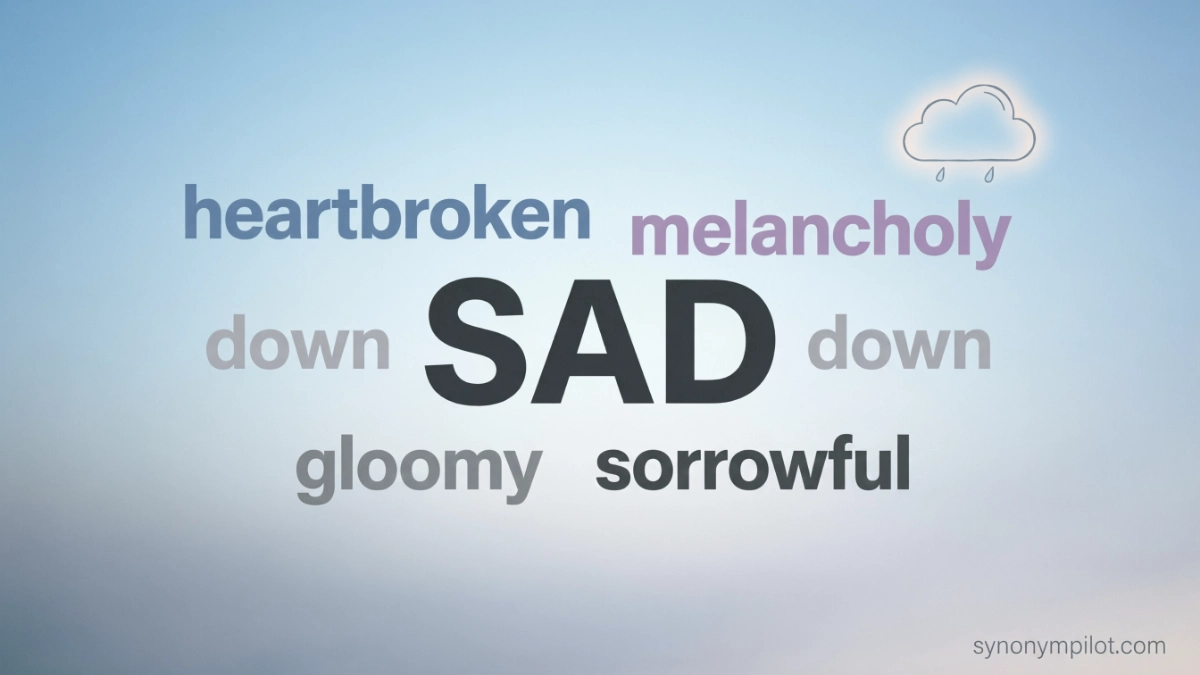
Quick Answer: “Sad” means feeling unhappy, sorrowful, or down because of something disappointing, painful, or upsetting. It is a simple, neutral word used in everyday speech and writing. Words like “down,” “upset,” or “depressed” can replace “sad” depending on the intensity and type of emotion involved.
A friend texts you: “I just found out my grandmother passed away. I’m so sad.” You want to reply with something warmer than “that’s sad” so you write: “I’m so sorry, that must be heartbreaking.” The word “heartbreaking” carries far more weight and shows you truly understand the depth of their pain.
That is exactly why having more words for “sad” matters different situations call for different levels of emotional intensity, and the right word helps you connect more genuinely.
What Does “Sad” Mean?
“Sad” describes a feeling of unhappiness, sorrow, or disappointment. It can describe a person’s emotional state (“she felt sad”), an event or situation (“a sad story”), or something that causes unhappiness (“it’s sad that he couldn’t come”). It is one of the most basic and commonly used emotional words in English.
Meaning, Tone, and Context
At its core, “sad” describes a temporary or lasting feeling of unhappiness, usually caused by loss, disappointment, or difficulty. The tone of “sad” is neutral, gentle, and emotionally honest it works in nearly every context without sounding too dramatic or too casual.
“Sad” sounds natural in everyday conversation (“I’m feeling a bit sad today”), in children’s stories (“the sad little dog had no home”), in personal writing (“it was a sad day for everyone”), and even in more formal contexts when describing events (“the news of his passing was sad for the whole community”).
However, “sad” is also fairly general. It does not tell you how sad if it’s a quiet, lingering sadness, a sudden emotional blow, or a deep, overwhelming grief. Choosing a more specific synonym often helps you express exactly the kind of sadness you mean, and how strongly you feel it.
When and How to Use “Sad”
Use “sad” when you want a simple, gentle, and universally understood way to describe unhappiness. It works in casual conversation, personal writing, and storytelling without sounding overly dramatic.
Here are natural examples across different situations:
- “I felt sad when my best friend moved away.” (personal, emotional)
- “It was a sad ending to an otherwise wonderful trip.” (descriptive, conversational)
- “The movie has a sad scene near the end that made everyone cry.” (casual, descriptive)
- “Many readers found the novel’s conclusion sad but meaningful.” (literary, academic)
When you want to express a stronger, more specific, or more nuanced emotion grief, disappointment, loneliness, or quiet melancholy a well chosen synonym communicates that feeling far more precisely than “sad” alone.
Another Word for Sad
If you need one quick, reliable alternative depending on context:
- For mild sadness → down or blue
- For deep sadness → heartbroken or devastated
- For quiet, gentle sadness → melancholy or wistful
- For formal or literary writing → sorrowful or mournful
- For disappointment based sadness → upset or disheartened
There is no single “best” replacement for “sad” the right word depends on the cause, intensity, and emotional depth of the feeling.
When Not to Use This Word
Avoid “sad” when describing clinical depression or a serious mental health condition. “Sad” describes a temporary emotional state, while “depressed” (in a clinical sense) refers to a medical condition that lasts much longer and affects daily functioning. Using “sad” instead of seeking proper support for ongoing low mood can downplay something that deserves real attention.
Avoid “sad” when the situation calls for a much stronger word. “I felt sad when my dog died” understates the depth of grief many people feel after losing a pet. “Devastated,” “heartbroken,” or “grief stricken” reflect that intensity more honestly.
Avoid using “sad” repeatedly in creative writing. If every emotional moment in a story is described as “sad,” the writing loses emotional texture. Mixing in “melancholy,” “wistful,” “forlorn,” or “heartbroken” depending on the scene adds depth and variety.
Words Commonly Confused With Sad
Sad vs. Depressed:
“Sad” describes a temporary emotional state caused by something specific disappointment, loss, or a difficult event. “Depressed” can describe a passing low mood, but in a clinical sense, it refers to a diagnosed mental health condition involving persistent low mood, loss of interest, and other symptoms over time. These two words are not interchangeable when discussing mental health.
Sad vs. Upset:
“Upset” often implies a reaction to something specific usually involving frustration, hurt, or disappointment caused by another person’s actions or an unfair situation. “Sad” is broader and can exist without a clear cause. “She was upset that he forgot her birthday” focuses on the cause. “She felt sad all afternoon” can exist without a specific trigger.
Sad vs. Lonely:
“Lonely” specifically describes the feeling of being alone or disconnected from others, regardless of if other people are physically present. “Sad” is broader and can occur for many reasons. Someone can feel lonely without feeling sad, and sad without feeling lonely though the two often occur together.
Sad vs. Disappointed:
“Disappointed” describes sadness specifically caused by unmet expectations. “Sad” can come from many sources loss, empathy, nostalgia, or general low mood. “I was disappointed that the concert got canceled” focuses on expectations not being met. “I was sad about the cancellation” is more general.
Best Synonym by Context
| Context | Best Synonym | Why It Fits |
|---|---|---|
| Mild, everyday sadness | Down / Blue / Low | Casual, simple, and conversational |
| Deep grief or loss | Heartbroken / Devastated / Grief-stricken | Strong emotional intensity for serious situations |
| Quiet, reflective sadness | Melancholy / Wistful / Pensive | Soft, thoughtful, and introspective tone |
| Formal or literary writing | Sorrowful / Mournful / Despondent | Elevated and emotionally rich vocabulary |
| Disappointment-based sadness | Disheartened / Dejected / Let down | Shows emotional reaction to unmet expectations |
| Describing sad events or stories | Tragic / Heartbreaking / Poignant | Focuses on situations, not just feelings |
| Children’s stories | Sad / Unhappy / Gloomy | Simple, clear, and age-appropriate |
Which Synonym Should You Choose?
Ask yourself these quick questions before picking a replacement for “sad”:
1. How intense is the feeling?
“Down” and “blue” suit mild sadness. “Heartbroken” and “devastated” suit deep, overwhelming grief.
2. What caused the sadness?
“Disappointed” and “let down” suggest unmet expectations. “Heartbroken” and “grief stricken” often relate to loss. “Lonely” relates to disconnection rather than a specific event.
3. Is this about a person’s feeling or a situation/story?
“Melancholy” and “wistful” describe a person’s inner emotional state. “Tragic” and “heartbreaking” often describe events, stories, or situations rather than someone’s mood directly.
4. How formal or literary is the writing?
“Sorrowful” and “mournful” suit formal or literary contexts. “Down” and “blue” suit casual conversation.
Real Life Examples of “Sad” in Sentences
School:
“The story made many students feel sad by the final chapter.”
“She felt a little sad after saying goodbye to her classmates on the last day.”
Workplace:
“The team felt sad when their colleague announced she was leaving the company.”
“It was a sad moment for everyone when the long running project finally ended.”
Writing:
“The character’s sad expression revealed everything the dialogue did not say.”
“Critics described the film’s ending as quietly sad rather than dramatic.”
Conversation:
“I’m feeling kind of sad today not sure exactly why.”
“It made me really sad to hear that the restaurant closed down.”
50 Synonyms for “Sad”
| Synonym | Simple Meaning | Example Sentence |
|---|---|---|
| Unhappy | Not feeling good | He seemed unhappy about the decision. |
| Down | Feeling low (informal) | I’ve been feeling down lately. |
| Blue | Emotionally low (informal) | She’s been feeling blue all week. |
| Upset | Emotionally troubled | He was upset after the argument. |
| Disappointed | Sad due to unmet expectations | She was disappointed by the result. |
| Heartbroken | Deep emotional pain | He was heartbroken after the breakup. |
| Devastated | Extremely sad | She was devastated by the news. |
| Miserable | Very unhappy | The weather made everyone miserable. |
| Gloomy | Dark, sad mood | He felt gloomy all day. |
| Dejected | Sad after failure | The team looked dejected. |
| Despondent | Very hopeless and sad | He became despondent after job rejection. |
| Melancholy | Gentle sadness | She felt a quiet melancholy. |
| Sorrowful | Deep sadness (formal) | He gave a sorrowful speech. |
| Mournful | Sad, often due to loss | The mournful song echoed in the hall. |
| Grief-stricken | Overcome with grief | The family was grief-stricken. |
| Wistful | Sad with longing | She gave a wistful smile. |
| Forlorn | Lonely and sad | The forlorn child waited alone. |
| Glum | Quietly sad | He looked glum at dinner. |
| Crestfallen | Visibly disappointed | She looked crestfallen after the rejection. |
| Downhearted | Discouraged | Don’t be downhearted about it. |
| Dispirited | Without hope or energy | The team felt dispirited. |
| Low-spirited | Emotionally low | He’s been low-spirited lately. |
| Tearful | On the verge of crying | She gave a tearful goodbye. |
| Distressed | Deep emotional pain | The passengers were distressed. |
| Troubled | Emotionally uneasy | He looked troubled. |
| Hurt | Emotionally wounded | She felt hurt by the comment. |
| Wounded | Deep emotional injury | His pride felt wounded. |
| Aching | Deep emotional pain | There was an aching sadness. |
| Hollow | Empty feeling inside | He felt hollow after the loss. |
| Empty | Emotionally numb | She felt empty inside. |
| Bereft | Deep loss | He felt bereft after his loss. |
| Inconsolable | Cannot be comforted | The child was inconsolable. |
| Heavy-hearted | Deep sadness | She left heavy-hearted. |
| Pensive | Thoughtful sadness | He looked pensive. |
| Subdued | Quiet and sad mood | The room felt subdued. |
| Somber | Serious and sad | The atmosphere was somber. |
| Disheartened | Losing hope | Volunteers felt disheartened. |
| Let down | Emotionally disappointed | I felt let down. |
| Tragic | Extremely sad event | It was a tragic accident. |
| Heartrending | Deeply moving sadness | A heartrending story. |
| Heartbreaking | Very emotional sadness | A heartbreaking scene. |
| Poignant | Touching sadness | A poignant moment. |
| Bleak | Hopeless sadness | The future looked bleak. |
| Doleful | Sad expression | A doleful look. |
| Plaintive | Sounding sad | A plaintive song. |
| Down in the dumps | Very sad (informal) | He’s down in the dumps. |
| Out of sorts | Slightly sad/unwell | She’s out of sorts. |
| Saddened | Made sad | We were saddened by the news. |
| Choked up | Emotionally overwhelmed | He got choked up speaking. |
Synonym Groups & Usage Differences
Formal
Sorrowful, mournful, despondent, bereft, somber, poignant suit literary writing, formal speeches, and emotionally serious contexts such as obituaries or memorials.
Informal
Down, blue, glum, down in the dumps, out of sorts sound natural in everyday conversation and casual writing among friends and family.
Academic / Literary
Melancholy, wistful, forlorn, poignant, heartrending appear frequently in literary analysis, creative writing, and discussions of tone and mood in fiction.
Professional
Saddened, disheartened, troubled, distressed sound appropriate in workplace communication when discussing sensitive news or events with measured emotion.
Conversational
Down, upset, disappointed, let down, out of sorts, down in the dumps are the most natural choices in spoken English and casual writing.
Strongest vs. Weaker
“Devastated,” “heartbroken,” “grief stricken,” and “inconsolable” describe intense, overwhelming sadness. “Down,” “blue,” and “out of sorts” describe mild, everyday sadness much weaker in emotional intensity than “sad” itself in some contexts.
Emotional vs. Neutral
“Heartbroken,” “bereft,” and “aching” carry deep emotional weight and personal vulnerability. “Saddened,” “disheartened,” and “somber” feel slightly more composed and measured, suitable for professional or public communication.
Antonyms of “Sad”
| Antonym | Simple Meaning | Example Sentence |
|---|---|---|
| Happy | Feeling joy or pleasure | She felt happy after hearing the good news. |
| Cheerful | Bright and positive mood | His cheerful attitude lifted everyone’s spirits. |
| Joyful | Full of happiness | The room was filled with joyful laughter. |
| Content | Calm and satisfied | He felt content with his life. |
| Upbeat | Optimistic and positive | She stayed upbeat despite the challenges. |
| Elated | Extremely happy | They were elated after winning the award. |
| Delighted | Very pleased | We were delighted to see you. |
| Lighthearted | Free from worry or sadness | The mood was lighthearted and fun. |
| Excited | Energetic happiness | The kids were excited about the trip. |
| Ecstatic | Extremely joyful | She was ecstatic about the results. |
Comparison:
Sad vs. Related Words
These words often replace “sad,” but each carries a distinct emotional weight, cause, or formality level.
Sad vs. Depressed
“Sad” describes a temporary emotional response to something specific. “Depressed,” especially in a clinical context, describes a lasting mental health condition involving persistent low mood, loss of interest, and other symptoms over weeks or months. If sadness lasts a long time and affects daily life, it may be worth talking to a professional rather than simply describing it as “sad.”
Sad vs. Upset
“Upset” often implies a reaction to a specific cause something someone did or said, or an unfair situation. “Sad” is broader and doesn’t require a specific trigger. “I’m upset that you canceled without telling me” focuses on the cause. “I’ve felt sad all day” can exist without a clear reason.
Sad vs. Melancholy
“Melancholy” describes a gentle, reflective, often poetic kind of sadness sometimes even pleasant in its own quiet way. “Sad” is more direct and immediate. “Melancholy” suits creative writing and personal reflection; “sad” works everywhere, including everyday conversation.
Sad vs. Heartbroken
“Heartbroken” describes intense emotional pain, usually from a significant loss a relationship ending, a death, or a major disappointment. “Sad” can describe much milder feelings too. Saying “I’m heartbroken that the coffee shop closed” would sound exaggerated unless that place held deep personal significance.
Sad vs. Tragic
“Tragic” describes events or situations not a person’s internal feeling. “The accident was tragic” describes the event itself. “I felt sad about the accident” describes a personal emotional response. You cannot say “I feel tragic” to describe your own emotions.
Common Phrases and Expressions
“Down in the dumps” feeling sad or low, often without a specific serious cause.
Example: “She’s been down in the dumps since her vacation plans fell through.”
“Cry your eyes out” to cry intensely, often due to deep sadness.
Example: “He cried his eyes out after watching the ending of that movie.”
“A heavy heart” a feeling of deep sadness, often before or after a difficult event.
Example: “She left her hometown with a heavy heart, knowing it might be years before she returned.”
“Put a damper on something” to make an event or mood less happy.
Example: “The rain really put a damper on our outdoor celebration.”
“At a low point” describes a difficult or sad period in someone’s life.
Example: “He was at a low point in his life when his old friend reached out to check on him.”
“Cry a shoulder to lean on” (commonly: “a shoulder to cry on”) someone who offers comfort during sadness.
Example: “Whenever things get hard, she knows she has a shoulder to cry on.”
Common Mistakes to Avoid
Using “depressed” casually for everyday sadness:
“Depressed” carries clinical weight for many people. Saying “I’m so depressed because my favorite show ended” can sound dismissive of people experiencing actual depression. “Disappointed” or “bummed out” fits everyday situations better.
Confusing “sad” and “lonely”:
These often overlap but are not the same. “Lonely” specifically relates to a lack of connection with others, while “sad” can occur for many reasons unrelated to being alone. Someone surrounded by people can still feel sad.
Overusing “sad” in creative writing:
When every emotional scene uses “sad,” writing feels flat. Mixing in “melancholy,” “wistful,” “heartbroken,” or “forlorn” depending on the situation adds emotional texture and keeps readers engaged.
Using “tragic” to describe personal feelings:
“Tragic” describes events, not internal emotions. “I feel tragic” is incorrect. “I feel devastated” or “the situation is tragic” are both correct, depending on if you’re describing your feeling or the event itself.
Using strong words like “devastated” for minor disappointments:
Saying “I’m devastated that the café ran out of my favorite muffin” sounds exaggerated and can come across as insincere. Reserve “devastated,” “heartbroken,” and “grief stricken” for situations involving genuine loss or significant emotional impact.
FAQs
What is a gentle synonym for “sad” that isn’t too dramatic?
A: “Down,” “blue,” and “low” all describe mild sadness without sounding overly dramatic. They work well for everyday situations feeling a bit off, tired, or quietly unhappy without a major cause.
What is the difference between “sad” and “depressed”?
A: “Sad” describes a temporary emotional response to something specific, like bad news or disappointment. “Depressed,” in a clinical sense, refers to a lasting mental health condition involving persistent low mood and other symptoms over time. If sadness feels constant and affects daily life, it may be worth speaking with a professional.
What is a stronger word than “sad” for describing grief?
A: “Heartbroken,” “devastated,” and “grief stricken” all express much deeper sadness than “sad,” especially in situations involving loss, death, or significant emotional pain.
Is “blue” the same as “sad”?
A: “Blue” is an informal way to describe mild sadness, often without a clear cause like feeling a bit down or low energy. “Sad” is more general and can describe both mild and intense feelings, depending on context.
What word describes a sad but peaceful or reflective feeling?
A: “Melancholy,” “wistful,” and “pensive” all describe a quieter, more reflective kind of sadness often associated with memories, nostalgia, or thoughtful moments rather than sharp emotional pain.
Conclusion
“Sad” is a simple, honest word that works in almost every situation but it doesn’t always capture exactly how someone feels. If you’re describing a quiet melancholy, a sudden disappointment, or deep grief, the right word helps you express your emotions more clearly and connect more genuinely with others.
This week, pay attention to moments when you or someone else says “sad,” and think about which specific word might fit better. Was it disappointment? Loneliness? Quiet reflection? Try using words like “wistful,” “disheartened,” or “heartbroken” where they genuinely fit.
Building this kind of emotional vocabulary takes practice, but it makes a real difference in how clearly and how kindly you communicate with the people around you.

Hi, I’m Theo John, a passionate word explorer who loves diving into the beauty of the English language. I write about synonyms, word meanings, and practical vocabulary tips to help readers communicate with confidence. synonympilot.com