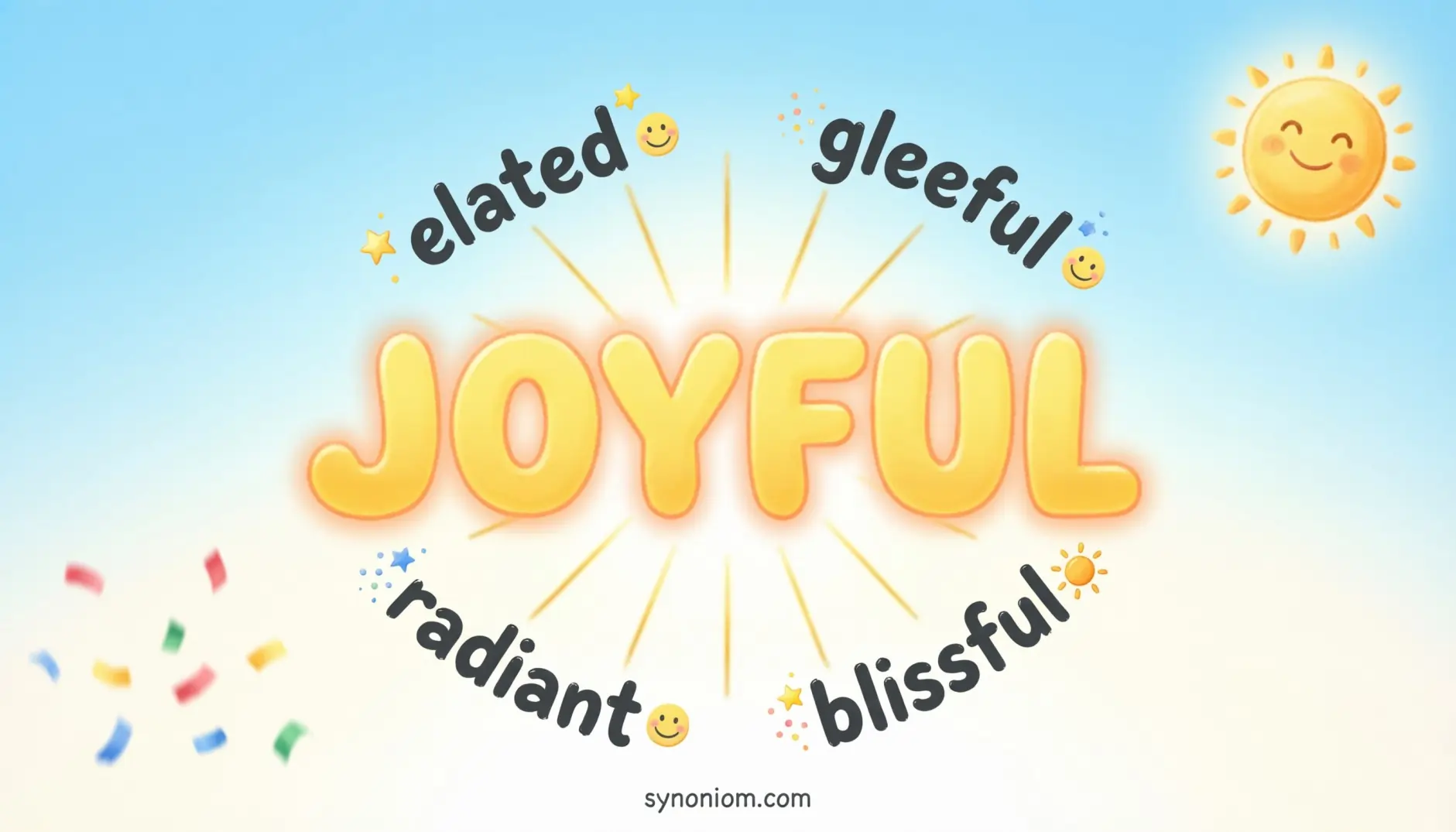
You just watched a child open a birthday present and completely light up. You want to describe that moment in your journal, but “joyful” feels a little plain for the absolute radiance on their face. Or you’re writing a wedding toast and you’ve already used “happy” and “joyful” twice each you need a word with more warmth, more energy, more life.
“Joyful” is a wonderful word, but English gives you dozens of ways to express happiness, delight, and elation each with its own emotional temperature, intensity, and context. If you need something tender and quiet or bright and exuberant, there’s a more precise word waiting for you.
This guide covers 50 genuine synonyms for “joyful,” explains the differences between them, and helps you choose the right word for every moment.
What Does “Joyful” Mean? (Featured Snippet Definition)
“Joyful” describes a state or expression of great happiness and pleasure. It goes beyond simply being content or satisfied it suggests an active, visible, often overflowing sense of happiness. Someone joyful isn’t just okay; they are genuinely, deeply glad, and that feeling usually shows.
Meaning, Tone, and Context
At its core, “joyful” describes happiness that is full, warm, and often outwardly expressed. It has a slightly elevated, heartfelt quality more emotional depth than “happy,” more gentleness than “excited,” more warmth than “pleased.”
In terms of tone, “joyful” sits in a warm, slightly formal to neutral register. It works well in:
- Personal writing and journaling (“It was a joyful reunion”)
- Creative writing and storytelling (“She let out a joyful laugh”)
- Formal speeches, toasts, and tributes (“This is a truly joyful occasion”)
- Song titles, poetry, and inspirational writing
- Religious and spiritual contexts, where “joyful” appears very frequently (“a joyful spirit,” “joyful noise”)
In everyday casual conversation, people are more likely to say “happy,” “thrilled,” or “over the moon” than “joyful.” The word has a slightly elevated, expressive quality that makes it feel intentional and heartfelt rather than offhand.
When and How to Use “Joyful”
“Joyful” works most naturally when you want to describe:
- A full, warm, visible happiness not just contentment (“a joyful celebration”)
- The quality or mood of an experience, event, or occasion (“a joyful gathering”)
- Someone’s expression or emotional state (“she was genuinely joyful”)
- Creative and artistic descriptions of happiness in writing or lyrics
- Contexts where “happy” feels too ordinary and “ecstatic” feels too intense
One useful note: “joyful” is most often used as an adjective describing people, occasions, or expressions. You’d describe a “joyful occasion” or a “joyful child” rather than saying “I feel joyful” in casual speech though the latter is perfectly correct in more reflective or literary writing.
50 Synonyms for “Joyful”
| Synonym | Simple Meaning | Example Sentence |
|---|---|---|
| Happy | feeling pleasure and contentment | She looked happy. |
| Delighted | very pleased | He was delighted to see her. |
| Elated | extremely happy | She was elated by the news. |
| Cheerful | noticeably happy | His cheerful mood helped everyone. |
| Gleeful | childlike joy | The kids were gleeful. |
| Exuberant | full of energy and joy | Her exuberant nature stood out. |
| Ecstatic | extremely happy | The fans were ecstatic. |
| Blissful | perfectly happy | They had a blissful day. |
| Radiant | glowing with happiness | She looked radiant. |
| Jubilant | joyful after success | The team was jubilant. |
| Overjoyed | very happy | She was overjoyed. |
| Thrilled | very excited | He was thrilled. |
| Exhilarated | energized happiness | She felt exhilarated. |
| Lighthearted | carefree happiness | The film was lighthearted. |
| Merry | lively and happy | The party was merry. |
| Buoyant | cheerful and optimistic | She felt buoyant. |
| Jovial | friendly happiness | The host was jovial. |
| Sunny | naturally happy | She has a sunny personality. |
| Beaming | smiling with joy | He was beaming. |
| Bright eyed | energetic happiness | The kids were bright eyed. |
| Glowing | visibly happy | She was glowing. |
| On cloud nine | extremely happy | He is on cloud nine. |
| Over the moon | very delighted | She was over the moon. |
| Walking on air | very happy | He was walking on air. |
| In high spirits | cheerful mood | The team was in high spirits. |
| Full of beans | lively and happy | The kids are full of beans. |
| Tickled pink | very pleased | She was tickled pink. |
| On top of the world | extremely happy | He felt on top of the world. |
| Stoked | very excited | I’m stoked. |
| Pumped | full of energy | The team was pumped. |
| Buzzing | excitedly happy | She was buzzing. |
| Hyped | very excited | Everyone was hyped. |
| Chuffed | very pleased (BrE) | He was chuffed. |
| Pleased | satisfied happiness | She was pleased. |
| Grateful | thankful happiness | He felt grateful. |
| Content | calm happiness | She felt content. |
| Satisfied | fulfilled happiness | He was satisfied. |
| Warm | gentle happiness | She felt warm inside. |
| Euphoric | intense joy | The crowd was euphoric. |
| Enchanted | magical happiness | The kids were enchanted. |
| Enraptured | absorbed joy | She was enraptured. |
| Animated | lively happiness | He became animated. |
| Vivacious | lively and joyful | She is vivacious. |
| Spirited | energetic joy | The crowd was spirited. |
| Festive | celebratory joy | The mood was festive. |
| Celebratory | joyful occasion | It felt celebratory. |
| Zestful | full of enthusiasm | She is zestful. |
| Carefree | free from worry | Those days were carefree. |
| Rapturous | overwhelming joy | The audience was rapturous. |
Important Synonym Groups
Formal Synonyms
Best for speeches, tributes, formal writing, literary essays, or published content:
- Jubilant, Elated, Rapturous, Exuberant, Radiant, Enraptured, Blissful, Euphoric
“The jubilant crowd gathered in the square” reads as polished and deliberate in a way that “the really happy crowd” does not.
Informal / Conversational Synonyms
Natural in everyday speech, casual messages, or friendly storytelling:
- Thrilled, Overjoyed, Delighted, Gleeful, Beaming, Lighthearted, Warm, Tickled pink
“She was absolutely thrilled” or “he was beaming all day” feel natural and genuine in conversation.
Academic Synonyms
Preferred in psychological, behavioral, or social science writing:
- Euphoric, Elated, Content, Satisfied, Animated, Buoyant, Exhilarated
Academic writing about wellbeing, positive psychology, or emotional states tends to use these measured, specific terms.
Professional / Workplace Synonyms
Appropriate in professional communications, feedback, or announcements:
- Pleased, Delighted, Cheerful, In high spirits, Celebratory, Spirited
“We are absolutely delighted to announce…” is standard in professional contexts where expressing happiness warmly but not excessively is the goal.
Emotional / Expressive Synonyms
When you want to capture depth of feeling in creative or personal writing:
- Radiant, Blissful, Enraptured, Rapturous, Glowing, Enchanted, Zestful
These paint a vivid emotional picture. “She was radiant with joy” says something specific and beautiful.
Slang / Very Casual Synonyms
For social media, texting, or casual speech among friends:
- Stoked, Pumped, Buzzing, Hyped, Chuffed, Full of beans, On cloud nine
Antonyms of “Joyful”
| Antonym | Meaning | Example Sentence |
|---|---|---|
| Sorrowful | deeply sad or grieving | He looked sorrowful at the farewell. |
| Miserable | very unhappy and uncomfortable | The weather made everyone miserable. |
| Dejected | low in spirit after disappointment | She felt dejected after rejection. |
| Gloomy | dark and sad mood | He stayed gloomy all day. |
| Melancholic | gently reflective sadness | The movie left a melancholic feeling. |
| Despondent | hopeless and deeply down | He became despondent after failures. |
| Downcast | visibly sad or discouraged | She looked downcast after the news. |
| Cheerless | without happiness or warmth | The room felt cheerless and empty. |
| Forlorn | lonely and abandoned in sadness | He stood forlorn at the station. |
| Disheartened | losing hope or confidence | She felt disheartened by criticism. |
Comparison: “Joyful” vs. Similar Words
Joyful vs. Happy
“Happy” is the most common, everyday word for positive feeling broad, neutral, and widely used. “Joyful” is warmer and more expressive, suggesting happiness that is full and outwardly felt. You’d wish someone a “Happy Birthday” on a card but describe a family reunion as “a joyful gathering.” “Joyful” has more emotional weight.
Joyful vs. Elated
“Elated” describes a more intense, elevated feeling usually tied to a specific achievement or good news. It carries a slight sense of triumph or relief alongside the happiness. “She was elated after passing her exams” implies a higher peak than simply “she was joyful.” Joyful can describe a quiet, sustained feeling; elated is more of a sharp emotional high.
Joyful vs. Cheerful
“Cheerful” describes a steady, consistently upbeat mood or personality. It’s more about disposition than a specific emotional peak. A cheerful person is always in good spirits; a joyful moment is a particular experience of deep happiness. You can be cheerful every day; you feel joyful about something specific.
Joyful vs. Gleeful
“Gleeful” has a more playful, sometimes mischievous energy it often suggests delight that is childlike or slightly impish. “Joyful” is warmer and more wholesome. A gleeful laugh can have a slightly wicked quality; a joyful laugh is pure and warm. “The children were gleeful” suggests lively, bouncy excitement; “the children were joyful” is gentler and more heartfelt.
Joyful vs. Blissful
“Blissful” describes a state of perfect, peaceful happiness complete contentment with no trace of worry or wanting. “Joyful” is more active and expressive. Someone blissful is serene; someone joyful may be beaming, laughing, or visibly overflowing. Bliss is inner; joy tends to radiate outward.
Common Phrases and Expressions
1. “Jump for joy”
To be so happy that you physically or emotionally leap with delight used literally and figuratively. Example: “She nearly jumped for joy when she saw her name on the list.”
2. “Burst with happiness”
To feel so full of joy that it can’t be contained. Example: “He felt like he could burst with happiness standing at the altar.”
3. “Beam from ear to ear”
To smile so widely and openly that total happiness is visible on the face. Example: “She was beaming from ear to ear when her daughter walked across the stage.”
4. “Light up”
To visibly brighten with happiness often used to describe faces or eyes. Example: “Her whole face lit up when she saw her old friend at the door.”
5. “On top of the world”
Feeling supremely happy and confident, like nothing could go wrong. Example: “After the promotion, he felt genuinely on top of the world.”
6. “Full of life”
Radiating energy, enthusiasm, and happiness in a way that’s noticeable to others. Example: “She was full of life at the party laughing, dancing, pulling everyone in.”
Common Mistakes to Avoid
Using “ecstatic” for ordinary happiness
“Ecstatic” describes overwhelming, almost beyon words joy it’s reserved for extraordinary moments. Using it for mild pleasure makes your language feel exaggerated and unconvincing. Save it for truly peak moments.
Confusing “content” with “joyful”
“Content” describes peaceful satisfaction it’s quiet happiness, not exuberant joy. Someone content is settled and at peace; someone joyful is actively, expressively happy. They describe different emotional intensities entirely.
Using “merry” outside seasonal or social contexts
“Merry” works beautifully in social, celebratory, or holiday settings “Merry Christmas,” “a merry gathering.” In other contexts it can sound old fashioned or out of place. “She felt merry after the diagnosis” would sound odd.
Treating “pleased” and “joyful” as the same
“Pleased” is much milder and more measured it’s the vocabulary of satisfaction, not of deep happiness. “I’m pleased with the results” is professional and calm. “I was joyful” suggests a fuller, more emotional experience.
Overusing “happy” when more expressive synonyms would serve better
“Happy” is the right word in many situations, but in creative or emotional writing, it can feel flat. Challenge yourself to reach for the word that captures the specific shade of happiness you mean “gleeful,” “radiant,” “elated,” or “blissful” will always paint a clearer picture.
FAQs
What’s the strongest synonym for “joyful” in English?
“Ecstatic,” “rapturous,” and “euphoric” are the most intense options each describing joy that’s almost overwhelming. “Elated” and “jubilant” are strong but slightly more controlled. The right choice depends on the intensity of the happiness you want to convey.
What’s the difference between “joyful” and “joyous”?
These are very close and often interchangeable. “Joyful” tends to describe a person’s internal feeling (“she was joyful”), while “joyous” is often used for events, occasions, or atmospheres (“a joyous celebration”). In practice the distinction is subtle, and both are correct in most contexts.
Is “gleeful” always positive?
Mostly yes, but “gleeful” can carry a slightly mischievous or even gloating edge in some contexts “gleefully rubbing his hands” might suggest someone taking pleasure in something others aren’t happy about. In children or innocent situations, it’s purely positive. Just be aware of the context.
Can I use “blissful” to describe a person, not just a state?
Yes “she looked blissful” or “he was blissful in those early days” are both natural. It describes a person who is in a state of perfect peace and happiness. It works as both a personal description and a mood description.
What’s a good joyful synonym for professional or formal writing?
“Delighted” is the most versatile formal option it’s warm without being excessive. “Pleased” works for measured professional happiness. For speeches or formal occasions, “jubilant,” “elated,” or “celebratory” all strike the right balance between expressing genuine emotion and maintaining appropriate register.
Conclusion
English has a remarkable range of words for happiness and they’re not all the same. “Joyful” sits at the warm, expressive, heartfelt end of the spectrum, and knowing its synonyms helps you find the exact shade of happiness you’re trying to express.
If you want the peaceful fullness of “blissful,” the triumphant peak of “elated,” the childlike energy of “gleeful,” or the gentle steadiness of “cheerful,” each word opens a slightly different window into what happiness can feel like and look like. Choosing the right one makes your writing come alive and your conversations feel more real.
Try noticing this week which words for happiness feel most natural to you in the moments you describe to others, in the messages you send, in the things you write down. That awareness is where a richer, more expressive vocabulary quietly begins.

Hi, I’m J.D. Salinger—a language lover who enjoys uncovering the nuances of words. I write about synonyms, meanings, and vocabulary tips to help readers express themselves more clearly and confidently. My goal is to make learning new words fun, simple, and practical. synonympilot.com