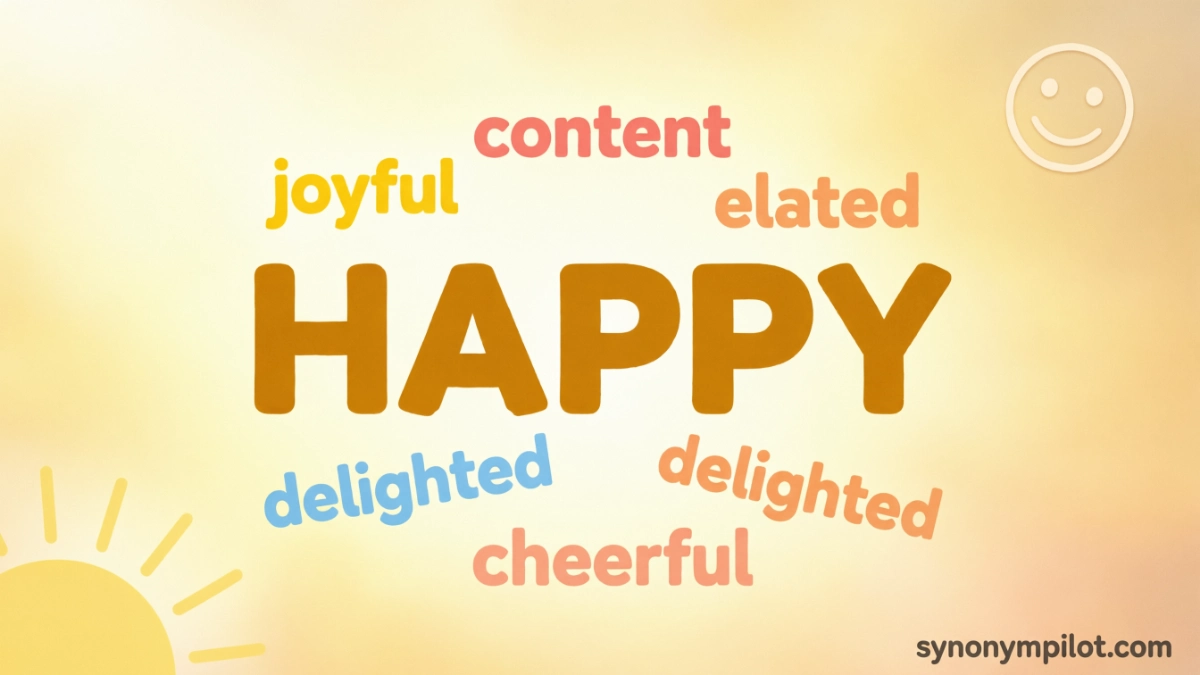
Quick Answer: “Happy” means feeling pleasure, contentment, or joy a positive emotional state that can range from quiet satisfaction to intense excitement. It works in almost every context, from casual conversation to formal writing. Words like “joyful,” “content,” or “elated” can replace “happy” depending on the intensity and cause of the feeling.
You’re writing a birthday message for your best friend and you type “I hope you have a happy birthday.” It’s fine warm, correct, and clear. But as you reread it, you want to say something that feels more like you.
So you write instead: “I hope today fills you with genuine joy and the kind of laughter that stays with you all year.”
The shift from “happy” to something more specific makes the message feel more personal, more alive, and more heartfelt.That difference between the default word and the right word is exactly what this article will help you find.
What Does “Happy” Mean?
“Happy” describes a positive emotional state a feeling of pleasure, satisfaction, or joy. It can describe someone who is mildly pleased (“I’m happy with the outcome”) or deeply joyful (“she was so happy she cried”). It works for people, situations, memories, and experiences, and it functions as both an adjective describing a feeling and a describing word for circumstances that bring positivity.
Meaning, Tone, and Context
At its core, “happy” is the most general and versatile word in English for describing positive emotion. The tone is warm, neutral, and universally understood. It works comfortably in casual conversation (“I’m so happy you came”), professional writing (“we are happy to announce”), personal messages (“hope you’re happy and well”), and children’s books (“the happy little puppy ran across the yard”).
Because “happy” covers such a wide emotional range, it can sometimes feel imprecise. It doesn’t tell you if the happiness is calm and quiet, wildly energetic, or deeply meaningful. “She looked happy” leaves a lot unsaid. “She looked radiant with joy” paints a much more vivid picture. Choosing a more specific synonym helps your reader feel exactly what you mean.
When and How to Use “Happy”
Use “happy” when you want a safe, clear, and universally understood word for positive emotion that doesn’t risk sounding too dramatic, too casual, or too formal.
Here are natural examples across different situations:
- “I’m really happy with how the project turned out.” (professional, pleased)
- “They looked so happy together in all the photos.” (personal, warm)
- “We are happy to assist you with your request.” (formal, courteous)
- “She finally feels happy after months of stress.” (emotional, reflective)
When you want to specify the type or intensity of happiness the quiet peace of contentment, the explosive excitement of elation, or the warm glow of delight a better chosen synonym does that work for you.
Another Word for Happy
If you need one quick, reliable alternative depending on context:
- For formal or professional writing → pleased or delighted
- For intense, overwhelming happiness → elated or overjoyed
- For quiet, settled happiness → content or at peace
- For excited happiness about something specific → thrilled or delighted
- For casual conversation → glad or over the moon
There is no single “best” replacement for “happy” the right word depends on how strong the feeling is, what caused it, and how formal your writing needs to be.
When Not to Use This Word
Avoid “happy” in creative writing when you want to show emotion rather than state it. “She was happy” tells the reader. “She smiled so widely her cheeks ached” shows them. In fiction and personal essays, specific, vivid alternatives almost always create stronger writing.
Avoid “happy” in formal academic writing when a more precise word fits better. “The participants reported feeling happy” is acceptable, but “the participants reported significantly higher levels of well being and life satisfaction” is more precise and analytically appropriate.
Avoid “happy” when the feeling is more complex than simple positivity. “Happy” suggests uncomplicated positive emotion. But if someone feels a bittersweet mix of joy and nostalgia, “wistful” or “moved” captures that layered feeling far better.
Words Commonly Confused With Happy
Happy vs. Joyful:
“Joyful” suggests a deeper, more active, and more outwardly expressed happiness than “happy.” “Happy” can be quiet and internal. “Joyful” tends to radiate outward it’s the kind of happiness you can see on someone’s face and in how they move. “She was happy at the news” describes an internal feeling. “She was joyful at the news” suggests it showed in everything she did.
Happy vs. Content:
“Content” describes a calm, settled satisfaction feeling at peace with your current situation. “Happy” can include excitement and energy. “Content” rarely does. “He was happy about his promotion” suggests enthusiasm. “He felt content with his life” describes a quiet, lasting satisfaction without necessarily involving excitement.
Happy vs. Pleased:
“Pleased” is more formal and measured than “happy” and often describes satisfaction with a specific outcome, rather than a general emotional state. “I’m pleased with the results” sounds professional and slightly reserved. “I’m happy with the results” sounds warmer and more personal.
Happy vs. Cheerful:
“Cheerful” describes a mood that shows externally someone who is upbeat, bright, and positive in their manner. “Happy” can be private and internal. You can feel happy without anyone knowing it, but a cheerful person actively radiates positivity in how they speak and act.
Best Synonym by Context
| Context | Best Synonym | Why It Fits |
|---|---|---|
| Formal & Professional Writing | Pleased, Delighted, Satisfied | Sounds polished, professional, and appropriately measured. |
| Creative or Literary Writing | Radiant, Joyful, Euphoric | Vivid, expressive, and emotionally rich. |
| Personal Messages | Glad, Thrilled, Overjoyed | Warm, natural, and sincere. |
| Academic Writing | Satisfied, Positive, Content | Neutral, precise, and objective. |
| Casual Conversation | Glad, Chuffed, Over the Moon | Relaxed, friendly, and conversational. |
| Describing a Lasting State | Content, Fulfilled, At Ease | Suggests long-term satisfaction and emotional stability. |
| After Good News | Elated, Overjoyed, Thrilled | Captures a strong, peak emotional response. |
Which Synonym Should You Choose?
Ask yourself these quick questions before picking a replacement for “happy”:
1. How intense is the feeling? “Content” and “pleased” describe mild, settled happiness. “Elated,” “overjoyed,” and “ecstatic” describe peak, intense happiness.
2. Was there a specific trigger? “Delighted” and “thrilled” usually relate to a specific event or surprise. “Content” and “fulfilled” describe a longer term emotional state.
3. Is this showing internally or externally? “Cheerful” and “beaming” describe visible happiness. “Content” and “at peace” describe how someone feels inside, often without obvious outward expression.
4. How formal is the context? “Pleased” and “satisfied” suit professional communication. “Chuffed,” “on top of the world,” and “over the moon” suit casual conversation.
Real Life Examples of “Happy” in Sentences
School
“The students looked genuinely happy after receiving their exam results.”
“She felt happy and proud when her artwork was displayed in the school hall.”
Workplace
“We are happy to offer you the position, pending reference checks.”
“The team was happy with the outcome of the client presentation.”
Writing
“The novel ends on a quietly happy note, with the characters at peace.”
“Critics described the film as a happy, uplifting story for all ages.”
Conversation
“I’m so happy you could make it tonight it means a lot.”
“He looked genuinely happy for the first time in months.”
Best Synonym by Context
| Context | Best Synonym | Why It Fits |
|---|---|---|
| Formal & Professional Writing | Pleased, Delighted, Satisfied | Polished, professional, and appropriately measured. |
| Creative or Literary Writing | Radiant, Joyful, Euphoric | Vivid, expressive, and emotionally rich. |
| Personal Messages | Glad, Thrilled, Overjoyed | Warm, natural, and heartfelt. |
| Academic Writing | Satisfied, Positive, Content | Neutral, precise, and objective. |
| Casual Conversation | Glad, Chuffed, Over the Moon | Friendly, natural, and conversational. |
| Describing a Lasting State | Content, Fulfilled, At Ease | Suggests long-term happiness and inner peace. |
| After Good News | Elated, Overjoyed, Thrilled | Captures strong excitement and peak happiness. |
| Celebrations & Achievements | Jubilant, Ecstatic, Beaming | Emphasizes success, pride, and celebration. |
| Relaxed Happiness | Peaceful, Warm, At Ease | Focuses on calm contentment rather than excitement. |
| Optimistic Outlook | Hopeful, Positive, Upbeat | Highlights confidence and positivity about the future. |
| Informal Speech | On Cloud Nine, Over the Moon, Walking on Air | Common idioms for extreme happiness. |
| Gratitude & Appreciation | Grateful, Fortunate, Gratified | Expresses happiness linked to thankfulness or good fortune. |
Synonym Groups and Usage Differences
Formal
Pleased, satisfied, gratified, delighted, content suit professional emails, formal announcements, academic writing, and business communication. They express positive emotion without sounding overly emotional or casual.
Informal
Chuffed, stoked, pumped, over the moon, on cloud nine, tickled pink, walking on air sound natural in everyday conversation, texting, and relaxed writing. They carry a playful, energetic quality that formal writing doesn’t call for.
Academic
Satisfied, content, positive, fulfilled, hopeful appear in psychological, educational, and sociological writing, especially when discussing emotional well being and life satisfaction.
Professional
Pleased, delighted, satisfied, in good spirits suit workplace communication, client correspondence, and HR writing. They’re warm without being overly personal.
Emotional / Personal
Overjoyed, blissful, radiant, beaming, ecstatic, grateful carry deep emotional warmth and suit personal writing, love letters, memoirs, and heartfelt messages.
Strongest vs. Weaker
“Ecstatic” and “euphoric” describe the highest intensity of happiness overwhelming and almost physical in strength. “Content” and “pleased” describe much gentler, quieter feelings. “Elated” and “overjoyed” sit somewhere in between.
Modern vs. Old Fashioned
“Merry” and “gay” (in the sense of cheerful) carry an old fashioned, literary quality, though “merry” remains widely used around the holidays. “Stoked,” “pumped,” and “chuffed” feel modern and colloquial, common in current everyday speech.
Antonyms of Happy
| Antonym | Meaning | Example Sentence |
|---|---|---|
| Sad | Feeling unhappiness or sorrow | She looked sad when the party ended earlier than expected. |
| Unhappy | Not happy; dissatisfied or sorrowful | He seemed unhappy with the way things turned out. |
| Miserable | Very unhappy, often in an uncomfortable situation | The cold, rainy week made everyone feel miserable. |
| Depressed | Persistently low in mood, often without an obvious cause | She had been feeling depressed for several weeks. |
| Disappointed | Unhappy because expectations were not met | He was disappointed when the concert was cancelled. |
| Discontented | Not satisfied with your situation | She felt discontented with her progress despite working hard. |
| Gloomy | Dark in mood, with little positivity | The gloomy atmosphere in the office affected everyone’s focus. |
| Dejected | Sad and discouraged, often after a setback | He looked dejected after missing the final goal. |
Comparison: Happy vs. Related Words
Happy vs. Joyful
“Joyful” is more active and outwardly expressed than “happy.” “Happy” can be a quiet inner state. “Joyful” tends to show in someone’s face, voice, and movement. “She was happy to hear the news” describes an internal reaction. “She was joyful at the news” suggests you could see it in everything about her.
Happy vs. Content
“Content” describes a settled, peaceful satisfaction feeling at ease without needing anything more. “Happy” can include excitement and energy. “Content” rarely does. “She was happy about the raise” suggests enthusiasm. “She felt content with her life” suggests calm, lasting peace rather than excitement.
Happy vs. Pleased
“Pleased” is more formal and measured. It often relates to a specific outcome being satisfactory. “Happy” is broader and warmer. “We are pleased to inform you” sounds professional. “We are happy to inform you” sounds slightly more personal and enthusiastic.
Happy vs. Elated
“Elated” describes peak happiness, usually triggered by something specific great news, a win, or a breakthrough. It is more intense and shorter lasting than “happy.” “She was happy about the result” is calm. “She was elated at the result” suggests a much more intense emotional high.
Happy vs. Cheerful
“Cheerful” describes visible, outward positivity someone who seems bright, upbeat, and easy to be around. “Happy” describes an internal feeling. A cheerful person actively radiates positivity; a happy person may feel it deeply without it necessarily showing.
Common Phrases and Expressions
“Happy go lucky”
Describes someone carefree and cheerful, who doesn’t worry about problems.
Example: “He has always been happy go lucky nothing seems to bother him for long.”
“Happy as a clam”
An informal phrase meaning very happy and comfortable in one’s situation.
Example: “After moving to the coast, she was happy as a clam.”
“On top of the world”
Feeling extremely positive and full of energy like nothing could go wrong.
Example: “After hearing the news, she felt on top of the world for the rest of the week.”
“Grinning from ear to ear”
Smiling very widely because of strong happiness.
Example: “He walked out of the audition grinning from ear to ear.”
“In high spirits”
In a particularly cheerful and positive mood.
Example: “The team arrived at the final in high spirits after a strong training session.”
“Jump for joy”
To be so happy that you feel like jumping used literally or figuratively.
Example: “When she heard she’d been accepted, she literally jumped for joy.”
Common Mistakes to Avoid
Using “happy” in creative writing instead of showing emotion:
Telling a reader “he was happy” is less powerful than showing it. “He laughed until his sides ached” or “she kept rereading the message just to feel it again” communicate happiness more vividly and convincingly.
Confusing “content” and “happy”:
“Content” describes quiet satisfaction without excitement it doesn’t always mean happy in a lively sense. “I’m content with my life” means you’re at peace. “I’m happy with my life” can mean the same but often implies a more active positive feeling.
Using “pleased” in very casual contexts:
“Pleased” sounds slightly stiff in informal conversation. “I was pleased to meet you” works in a formal introduction. “I was so happy to meet you” sounds warmer and more personal in most everyday situations.
Overusing “happy” in professional writing:
“We are happy to offer you the role” is fine, but repeating “happy” throughout a formal document can sound casual. “Delighted,” “pleased,” or “glad” add professional variety while maintaining warmth.
Treating “elated” and “happy” as the same level of emotion:
“Elated” is significantly more intense than “happy.” Using “elated” for mild positive feelings “I was elated to get a good parking spot” sounds exaggerated. Save it for genuinely exciting moments.
FAQs
What is the most formal synonym for “happy” in professional writing?
A: “Pleased” and “delighted” are the most common formal alternatives. “We are pleased to inform you” and “we are delighted to welcome you” both sound professional and warm without being overly casual.
What is a stronger word than “happy” for a very intense feeling?
A: “Elated,” “overjoyed,” “ecstatic,” and “euphoric” all describe happiness far more intense than “happy” usually triggered by something significant like great news, a major win, or a life changing moment.
What is the difference between “happy” and “glad”?
A: “Glad” is slightly simpler and more immediate than “happy.” “I’m glad you called” suggests simple relief or pleasure. “I’m happy you called” carries a bit more warmth and positive emotion. They overlap significantly but “glad” often feels a touch more casual and less emotionally deep.
Can “content” and “happy” be used interchangeably?
A: They’re related but not identical. “Content” suggests peaceful satisfaction without necessarily implying excitement or energy. “Happy” covers a wider range, including excitement and joy. Someone can be content without being particularly happy in a lively sense, and happy in an excited way without feeling the quiet peace of contentment.
What is a good synonym for “happy” in a children’s book or story?
A: “Cheerful,” “gleeful,” “delighted,” “joyful,” and “merry” all work beautifully in children’s writing. They’re expressive, easy to visualize, and carry positive, age appropriate energy. “The gleeful puppy wagged its tail” paints a much livelier picture than “the happy puppy.”
Conclusion
“Happy” is one of the most useful and emotionally honest words in English and that’s precisely why having more words for it matters so much.
If you’re looking for the quiet peace of “content,” the electric energy of “elated,” or the warm glow of “delighted,” each alternative adds a layer of precision that “happy” alone can’t always provide.
Start by adding two or three of these synonyms to your writing this week. Try “content” for settled moments, “thrilled” when something specific made you excited, and “radiant” when you want your writing to light up a little.
Notice how these words appear in books, conversations, and messages around you. Over time, finding the right word for the right feeling will become completely natural and your English will carry a warmth and precision that makes people really feel what you’re saying.

Hi, I’m Theo John, a passionate word explorer who loves diving into the beauty of the English language. I write about synonyms, word meanings, and practical vocabulary tips to help readers communicate with confidence. synonympilot.com