You’re texting a friend a photo of a tiny hedgehog curled into a ball, and all you type is “cute.” It works but imagine saying “that’s absolutely adorable” or “honestly, endearing is the only word for this.”
Suddenly your message has personality. “Cute” is one of those words we all reach for automatically, and for good reason but English gives you so many richer, more precise options worth knowing.
Quick Answer: What Does “Cute” Mean?
“Cute” is an adjective that describes something or someone who is attractive in a sweet, charming, or endearing way. It often implies smallness, innocence, or playful appeal. You can use it for people, animals, objects, ideas, and even behaviors.
Meaning, Tone & Context
At its core, “cute” describes a type of attractiveness that feels warm and approachable rather than dramatic or intense. It sits comfortably between “nice looking” and “beautiful” leaning toward sweetness over elegance.
Tone wise, “cute” is almost always informal and conversational. It carries a light emotional warmth that makes it feel natural in texting, casual compliments, social media captions, and everyday speech. That said, it rarely fits formal writing, academic essays, or professional contexts without sounding out of place.
“Cute” sounds most natural when describing babies, animals, romantic interests, small objects, cozy places, and gentle behaviors. It can also describe an idea or gesture “that was such a cute thing to do” giving it a slightly emotional, appreciative quality beyond just visual appearance.
When & How to Use “Cute”
Use “cute” when the attractiveness you’re describing feels gentle, sweet, or endearing rather than striking or dramatic. It fits naturally in casual conversation, social media, and light creative writing.
Realistic examples:
- “Her little brother is so cute he made her a card for no reason.”
- “That coffee shop has the cutest interior design.”
- “He did something really cute today he remembered my favorite order.”
- “Look at those puppies. They’re unbelievably cute.”
Notice how “cute” covers looks, behaviors, spaces, and gestures all at once. That flexibility is one of its strengths and also why it gets overused quickly.
Another Word for Cute
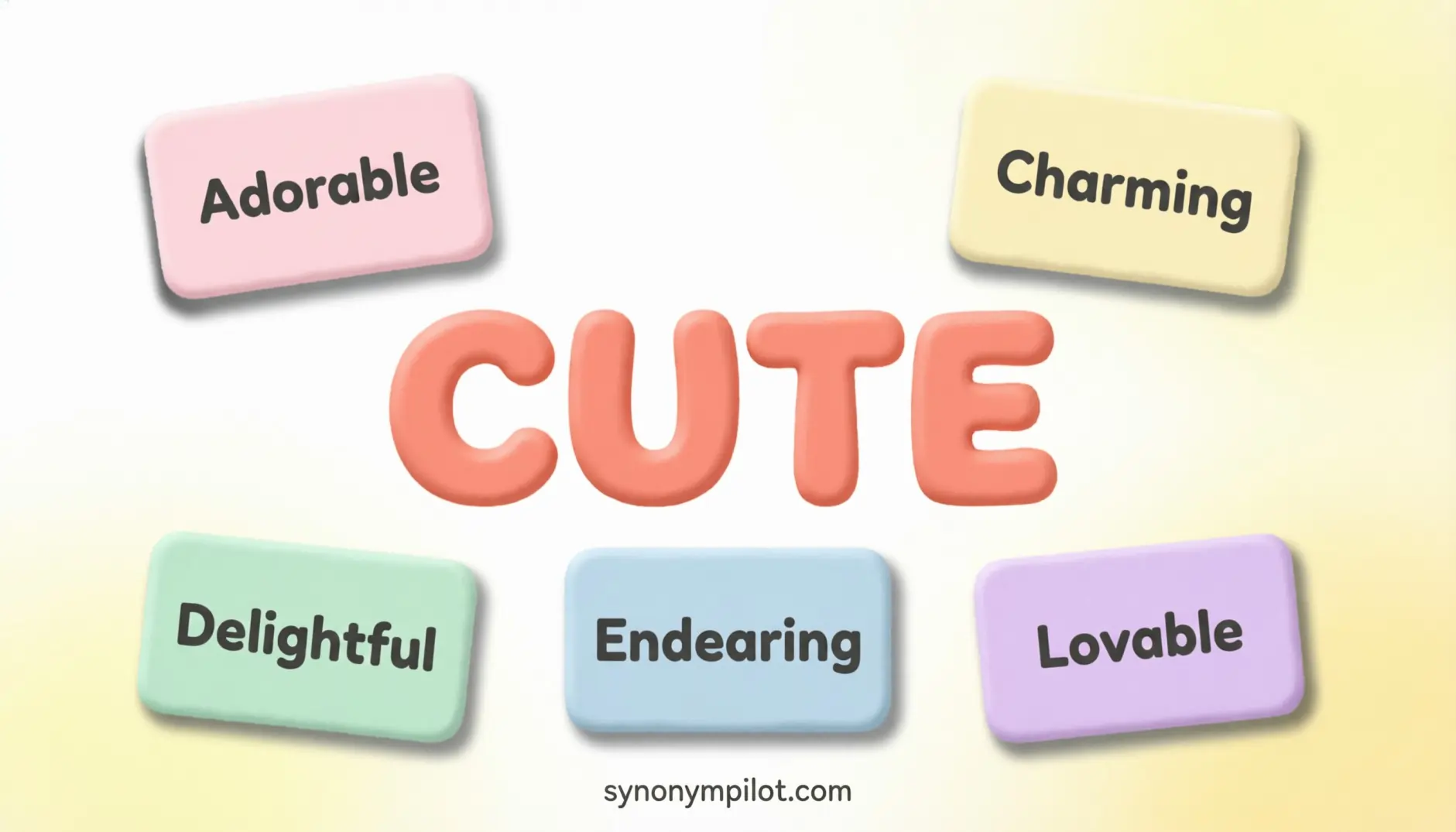
If you want a single strong swap, “adorable” is your best all purpose alternative. It carries the same warmth and sweetness as “cute” but feels slightly more expressive and heartfelt. Other top alternatives include charming, endearing, lovable, and sweet each adding a slightly different flavor depending on what exactly you’re describing.
When Not to Use “Cute”
Avoid “cute” in formal essays, academic writing, business communication, and professional feedback. Calling a colleague’s idea “cute” in a meeting can come across as dismissive or condescending even if you mean it positively. Similarly, using “cute” to describe an adult’s serious creative work can sound patronizing. In those contexts, reach for appealing, charming, clever, or delightful instead.
Also avoid “cute” when the beauty you’re describing is intense or striking “gorgeous” or “stunning” fit those moments far better.
Words Commonly Confused With Cute
Many people use “cute,” “pretty,” “beautiful,” and “attractive” almost interchangeably but they’re not the same. “Cute” implies sweetness and endearment. “Pretty” suggests delicate visual appeal. “Beautiful” carries depth and intensity. “Attractive” is more neutral and broadly applies to anything that draws positive attention. Knowing the difference helps you pick the word that actually matches what you feel.
Best Synonyms by Context
| Context | Best Synonym |
|---|---|
| Babies or animals | Adorable |
| Romantic interest | Charming / Lovely |
| A cozy place or object | Delightful / Sweet |
| A kind gesture | Endearing / Touching |
| Academic or formal writing | Appealing / Pleasant |
| Creative or literary writing | Winsome / Enchanting |
| Social media / casual chat | Precious / Darling |
| Professional feedback | Appealing / Attractive |
Which Synonym Should You Choose?
Ask yourself two things: What am I describing a person, object, behavior, or place? And what tone do I want warm and emotional, or neutral and professional? If you want warmth and sweetness, go with adorable, endearing, or charming. If you want something that fits professional or formal contexts, choose appealing, attractive, or pleasant. If you’re writing creatively, winsome, fetching, or enchanting will add personality and texture to your prose.
Real Life Examples of “Cute” in Sentences
School
“The kindergarteners made cute little handprint paintings for Parents’ Day.”
Workplace
“The new office layout has an appealing, welcoming feel to it.” (Here “cute” would sound too casual “appealing” works better.)
Writing
“The protagonist had an endearing habit of naming every plant in her apartment.”
Conversation
“Oh my gosh, that is the cutest thing I’ve heard all week.”
50 Synonyms for Cute
| Synonym | Simple Meaning | Example Sentence |
|---|---|---|
| Adorable | Sweet and lovable, often irresistibly so | The toddler’s laugh was completely adorable. |
| Charming | Delightfully pleasing in manner or appearance | He had a charming smile that made everyone feel at ease. |
| Endearing | Causing warm affection or fondness | Her endearing habit of leaving notes for friends was well known. |
| Lovable | Easy to love; inspiring genuine affection | The scruffy little dog was completely lovable. |
| Sweet | Gentle, kind, and pleasantly attractive | That was such a sweet thing for him to do. |
| Delightful | Causing joy and pleasure | What a delightful little café—we have to come back. |
| Precious | Deeply valued and sweetly appealing | The baby’s tiny hands looked so precious. |
| Darling | Sweetly charming and lovable | She wore a darling outfit to the birthday party. |
| Dainty | Delicately small and pretty | The dainty teacups were hand-painted with tiny flowers. |
| Winsome | Sweetly engaging and charming | The puppy had a winsome expression that nobody could resist. |
| Appealing | Attractive and pleasing in a broad sense | The app’s design is clean and very appealing. |
| Pleasant | Agreeable and enjoyable | He had a pleasant, easygoing personality. |
| Attractive | Drawing attention in a pleasing way | The arrangement of flowers looked very attractive. |
| Pretty | Pleasantly attractive in a soft way | She tied a pretty little ribbon around the gift box. |
| Lovely | Warm and pleasantly beautiful | What a lovely little corner of the garden. |
| Enchanting | Magically and irresistibly attractive | The fairy lights gave the room an enchanting glow. |
| Captivating | Holding attention through charm or beauty | The kitten had captivating blue eyes. |
| Fetching | Attractively charming | She looked quite fetching in her vintage coat. |
| Engaging | Holding interest through warmth or charm | He had an engaging personality. |
| Heartwarming | Emotionally uplifting and sweet | The reunion between the dog and its owner was heartwarming. |
| Tender | Gentle and emotionally warm | There was something tender about the way he spoke. |
| Innocent | Pure and sweetly guileless | The child’s innocent curiosity was refreshing. |
| Angelic | Beautifully gentle and pure | The sleeping baby had an angelic expression. |
| Cherubic | Round-faced and sweetly innocent | The toddler had cherubic cheeks. |
| Cuddly | Soft and inviting to hold close | The teddy bear was so cuddly. |
| Huggable | Warm and inviting of affection | That oversized sweater makes you look huggable. |
| Snuggly | Soft, warm, and cozy | She wrapped herself in a snuggly blanket. |
| Cozy | Warm, comfortable, and inviting | The bookshop had a cozy atmosphere. |
| Quaint | Charmingly old-fashioned or unusual | The village had a quaint charm. |
| Sprightly | Lively, cheerful, and energetic | The sprightly little terrier never seemed tired. |
| Perky | Cheerfully lively and attractive | She had a perky, upbeat energy. |
| Jolly | Happily cheerful and pleasant | The jolly snowman decoration made everyone smile. |
| Whimsical | Playfully imaginative and charming | The children’s book had a whimsical style. |
| Playful | Light-hearted and fun | The kitten had a playful personality. |
| Impish | Mischievously charming | His impish grin made everyone laugh. |
| Lively | Full of energy and charm | The lively puppy raced around the garden. |
| Spirited | Energetically charming and full of life | The spirited little girl climbed everything. |
| Animated | Lively and expressive | Her animated face made the story entertaining. |
| Bubbly | Cheerful and appealing | She had a bubbly personality. |
| Beguiling | Subtly charming and intriguing | The gallery had a beguiling atmosphere. |
| Gentle | Soft and mild in a pleasing way | He had a gentle kindness in his voice. |
| Soft | Gentle and appealing without harshness | The soft colors made the room relaxing. |
| Wholesome | Pure and warmly appealing | The show had a wholesome quality. |
| Photogenic | Looking attractive in photos | That dog is incredibly photogenic. |
| Eye-catching | Immediately noticeable and appealing | The tiny cactus was eye-catching. |
| Likable | Easy to like | He was immediately likable. |
| Nifty | Clever and pleasantly impressive | That’s a nifty little gadget. |
| Neat | Tidy and pleasantly attractive | The apartment had a neat design. |
| Twee | Excessively cute or quaint | The shop felt a little too twee. |
| Cute | Pleasantly attractive, charming, or lovable | The puppy looked cute in its new sweater. |
Synonym Groups & Usage Differences
Formal vs. Informal
Formal alternatives to “cute” include appealing, charming, attractive, and pleasant. These work in professional emails, product descriptions, and academic writing. Informal options like adorable, precious, darling, and sweet belong in conversation, social media, and casual writing.
Strongest vs. Weaker
If “cute” is a 6 out of 10 in emotional intensity, adorable hits an 8, enchanting reaches a 9, and irresistible goes to 10. On the weaker end, pleasant and neat are toned down choices that describe gentle, non overwhelming appeal.
Emotional vs. Neutral
Emotional synonyms endearing, heartwarming, precious, tender describe how a person or thing makes you feel. Neutral synonyms attractive, appealing, pleasant, photogenic focus more on objective appearance or quality without strong feeling attached.
Modern vs. Old Fashioned
Modern everyday choices: adorable, sweet, charming, lovable. Old fashioned or literary options: winsome, fetching, comely, dainty. Both have their place the older words add character and texture in creative writing.
Slang
Current slang alternatives include smol (internet slang for something tiny and cute), precious bean (affectionate online term), baby (used hyperbolically), and wholesome which has evolved in online culture to mean genuinely sweet and heartwarming beyond its traditional meaning.
Antonyms of “Cute”
| Antonym | Meaning | Example Sentence |
|---|---|---|
| Ugly | Unpleasant to look at | The broken-down shed was genuinely ugly. |
| Plain | Lacking beauty or charm | The packaging felt plain and uninviting. |
| Unattractive | Not pleasing or appealing | The color combination was unattractive and clashed badly. |
| Repulsive | Strongly off-putting or unpleasant | The smell from the rubbish bin was absolutely repulsive. |
| Grim | Joyless and unappealing | The waiting room had a grim, colorless atmosphere. |
| Harsh | Rough and unpleasant in tone or appearance | His harsh expression made children nervous. |
| Cold | Lacking warmth, charm, or appeal | The building’s glass exterior looked cold and unwelcoming. |
| Drab | Dull and lacking color or interest | The apartment was drab and badly needed repainting. |
Comparison: Cute vs. Similar Words
Cute vs. Adorable
Both describe sweet appeal, but “adorable” carries more emotional warmth and intensity. You might say a new haircut is “cute,” but when you see a puppy reunited with its owner, “adorable” is what actually comes out. Use “adorable” when you want the compliment to land with more feeling.
Cute vs. Pretty
“Pretty” focuses on visual, delicate attractiveness it describes how something looks. “Cute” includes behavior, personality, and gestures too. A person can do something “cute” without involving appearance at all. “Pretty” rarely works that way.
Cute vs. Charming
“Charming” implies a social, magnetic quality a person who draws people in through personality, wit, and warmth. “Cute” is more about sweetness and innocent appeal. A charming person commands a room; a cute person makes you want to hug them.
Cute vs. Beautiful
“Beautiful” is more intense and often more serious. It implies deep, sometimes overwhelming attractiveness. “Cute” is lighter, warmer, and more approachable. Calling something “beautiful” elevates it; calling it “cute” makes it feel accessible and warm.
Cute vs. Sweet
“Sweet” covers both appearance and behavior, much like “cute” but it leans more toward kindness, goodness, and emotional warmth. You call an action “sweet” when it shows thoughtfulness. You call something “cute” when it appeals visually or behaviorally in a charming way.
Common Phrases & Expressions
1. Cute as a button
Meaning: Extremely cute, especially in a small or neat way.
“Their baby is cute as a button everyone at the shower couldn’t stop holding her.”
2. Cute little thing
Meaning: An affectionate way of describing something small and charming.
“The bookshop had a cute little reading nook tucked in the corner.”
3. Too cute for words
Meaning: So charming or endearing that words don’t do it justice.
“When he showed up with flowers for no reason honestly, too cute for words.”
4. Playing it cute
Meaning: Acting cleverly or coyly to get a desired result.
“She was playing it cute, pretending not to know the answer when she clearly did.”
5. Cute meet / meet cute
Meaning: A charming, accidental first encounter between two people who later fall in love common in romantic films and stories.
“Their meet cute happened in a bookshop when they both reached for the same novel.”
6. Cuteness overload
Meaning: So much cuteness it feels overwhelming in a delightful way.
“That video of the baby panda sneezing is cuteness overload. I’ve watched it eight times.”
Common Mistakes to Avoid
1. Using “cute” in professional contexts
Calling a colleague’s work or idea “cute” in a meeting almost always sounds dismissive even if you mean it as a compliment. In professional settings, use appealing, well designed, clever, or thoughtful instead.
2. Confusing “cute” with “beautiful” or “gorgeous”
These describe different levels and types of attractiveness. Using “cute” for something genuinely breathtaking undersells it. And using “gorgeous” or “beautiful” for something small and sweet can feel overdramatic. Match the word to the intensity of what you’re describing.
3. Overusing “adorable” as an exact synonym
“Adorable” carries more emotional weight than “cute.” Using it constantly waters it down. Reserve it for moments that genuinely move you, and use “cute” for lighter, everyday appreciation.
4. Using “twee” as a compliment without knowing its baggage
“Twee” describes something that is overly cute to the point of being almost irritating or artificially precious. Using it as a straightforward compliment can confuse or offend. Know your audience before reaching for it.
5. Forgetting that “cute” can describe behavior, not just looks
Many learners use “cute” only for appearance. But in natural English, you absolutely use it for gestures, habits, actions, and personality traits. “He always holds the door it’s so cute.” Expand how you apply it.
FAQs
What is the most common synonym for cute?
“Adorable” is the most widely used and emotionally satisfying alternative it’s warm, expressive, and works for people, animals, objects, and gestures equally well.
Can “cute” be used to describe a guy?
Absolutely. “Cute” works for anyone regardless of gender. In romantic contexts especially, calling someone cute is a warm, genuine compliment. Some people also use handsome or charming for men in slightly more formal or serious contexts.
Is “cute” a strong compliment or a weak one?
It sits in the middle. “Cute” is genuine and warm, but it’s not as intense as “gorgeous,” “stunning,” or “beautiful.” If you want to make a bigger impression, reach for something stronger. That said, “cute” lands perfectly in casual, everyday compliments.
What’s a more formal word for cute to use in writing?
For formal or professional writing, try appealing, charming, attractive, or endearing. These carry the same positive sense without the casual tone of “cute.”
What’s the difference between “cute” and “endearing”?
“Cute” focuses on pleasant, sweet appeal often visual. “Endearing” specifically means something causes genuine affection in the person observing it. An “endearing” quality wins your heart; a “cute” quality simply pleases you. “Endearing” is slightly more emotional and often applies better to behaviors and personality traits.
Conclusion
Knowing the right synonym for “cute” isn’t about sounding fancy it’s about saying exactly what you mean and making the other person actually feel it. “Adorable” hits differently than “cute.” “Endearing” stays with someone longer than “sweet.” These small choices add up into a richer, more expressive version of your English.
So the next time you find yourself typing “cute” out of habit, pause for just a second and ask yourself is there a word that fits this moment even better? Start with the ones from this article, use them in real conversations, and watch how naturally they become part of the way you speak and write. One new word at a time is all it takes.

Hi, I’m Camron White, a word lover who enjoys exploring the beauty of the English language. I write about synonyms, meanings, and everyday vocabulary to help readers express themselves more clearly and confidently. My goal is to make learning new words simple, fun, and useful in real-life conversations. synonympilot.com